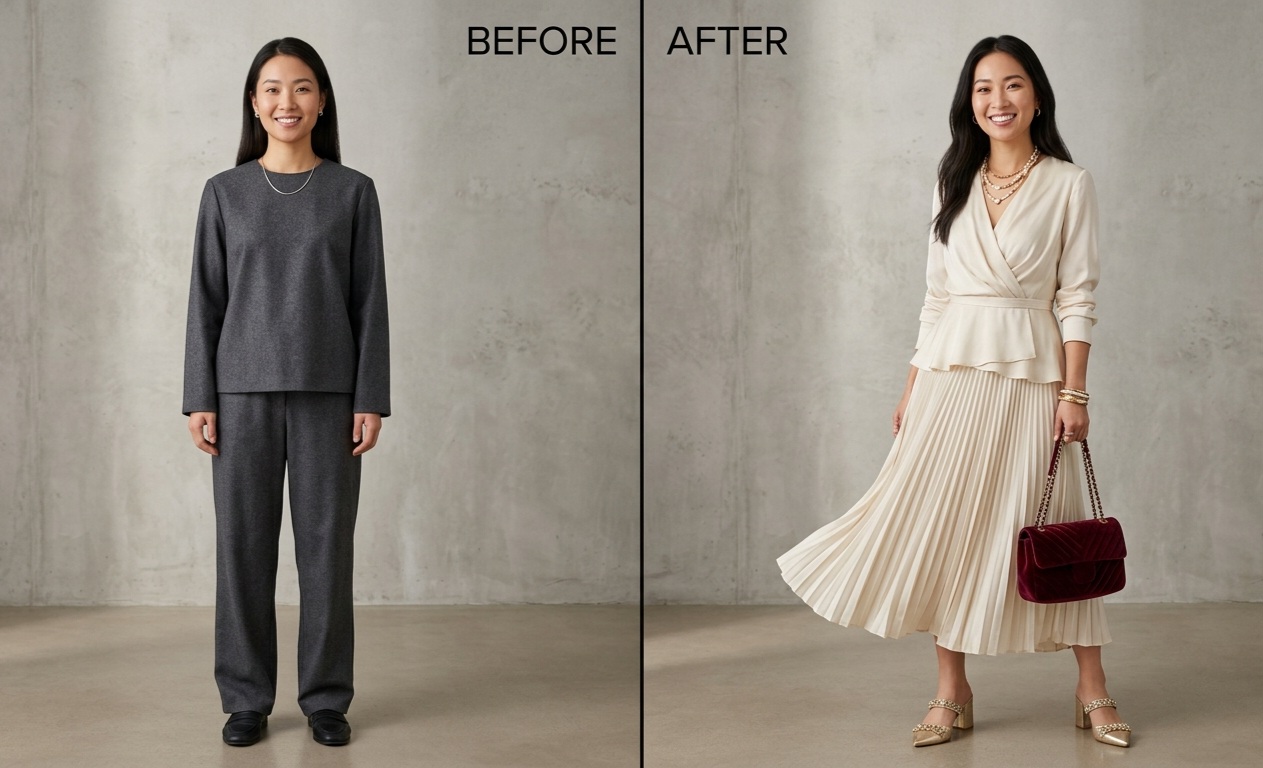
RECTANGULAR BODY TYPE COMPLETE STYLING & GLOW-UP GUIDE FOR WOMEN
Creating Shape, Definition, and Effortless Dimension
If you have ever searched for how to add curves to a rectangular body shape, why outfits sometimes look flat, or how to create a more defined waist naturally, this is exactly what you need to understand.
The rectangular body type is often described as balanced, straight, and evenly proportioned, where the shoulders, waist, and hips follow a similar line. It is a structure that carries elegance and simplicity, but without the right styling, it can sometimes feel like something is missing.
Not wrong. Not unattractive. Just slightly flat or undefined.
And that is where most confusion begins.
Many women with a rectangular body shape try different outfits, trends, and silhouettes, yet feel like their look lacks dimension. The clothes may be good, the effort is there, but the outfit does not create the impact they expected.
The truth is, rectangular body styling is not about changing your body. It is about creating visual shape through structure, layering, and intentional placement.
I have worked with women who felt their outfits looked “plain” no matter what they wore. The moment we introduced subtle waist definition, added controlled volume, and adjusted how pieces interacted with each other, everything shifted.
Not dramatically. But clearly.
The same body. The same wardrobe. But now with movement, shape, and presence.
When your styling creates dimension, your entire appearance starts to feel more intentional, more styled, and more complete.
This guide is built to help you do exactly that.
Here, you will learn how to create the illusion of curves, how to define your waist without restricting your comfort, how to choose dresses that add flow and shape, and how to use layering, cuts, and fabrics to build depth into your outfits.
You will also begin to notice small details that make a big difference. Where a belt sits. How a fabric falls. How structure and softness work together. These are the elements that turn a simple outfit into a styled one.
This is not about forcing curves. It is about creating balance, dimension, and a silhouette that feels naturally complete.
If you ever feel unsure while choosing outfits, curated selections are also available to help you see these principles applied in real pieces. They are designed to simplify your decisions, so you don’t have to second-guess what works.
Take your time with this. Once you understand how to create shape through styling, everything becomes easier.
Because when your outfit starts adding dimension instead of just covering your body, styling stops feeling flat.
It starts feeling intentional.
Understanding the Rectangle Body
The rectangle body shape is characterized by a straight vertical line from shoulders to hips, with minimal waist definition. Bust, waist, and hips are generally similar in width, giving the body a sleek, athletic, and balanced frame. Scientifically, this shape often results from a combination of balanced muscle tone and uniform fat distribution, sometimes associated with higher testosterone and lower estrogen ratios in women, leading to a naturally leaner, more linear frame. The rectangle silhouette is elegant, symmetrical, and versatile, offering a neutral canvas for fashion experimentation. While it lacks pronounced curves, the rectangle body can appear long, athletic, and poised when clothing and accessories are chosen strategically to create the illusion of shape and proportion.
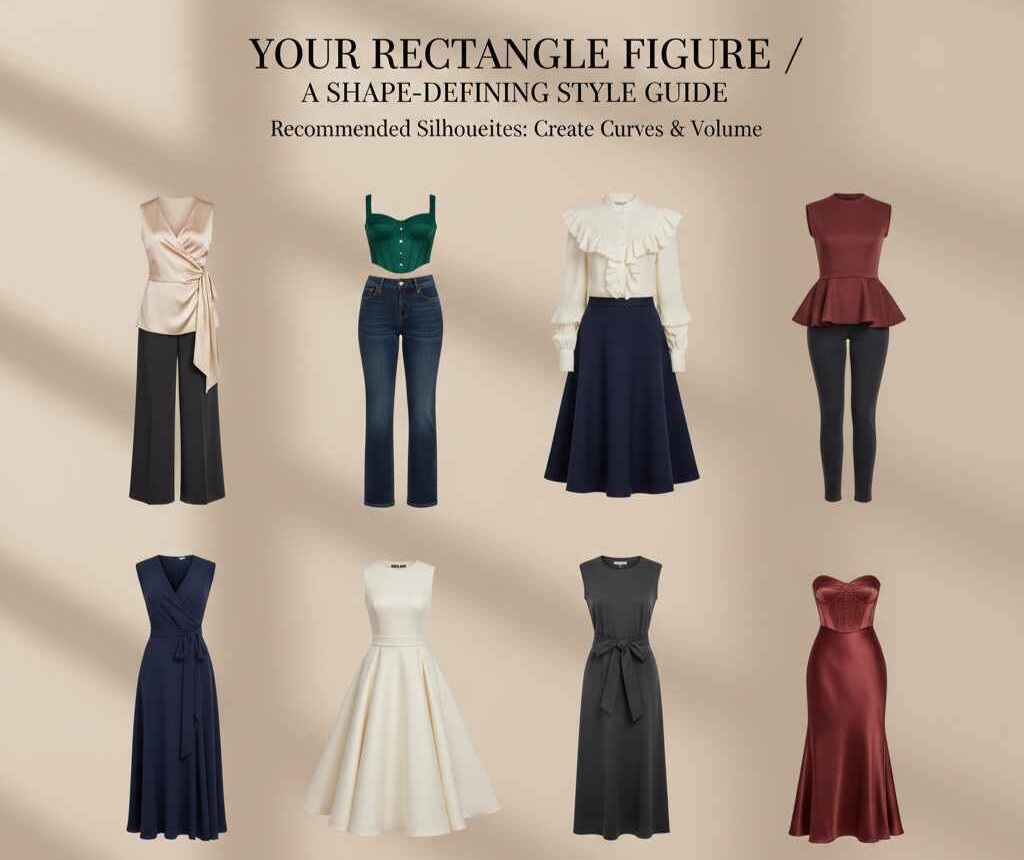
Strengths of the Rectangle Body
The rectangle body is one of the most adaptable shapes in fashion. Its balanced proportions make layering easy, and almost all silhouettes drape well without awkward pulling or gapping. The straight frame provides a natural elegance and is often associated with fitness and athleticism. The torso appears long, legs appear lean, and overall posture looks streamlined. Additionally, the rectangle body responds well to tailored clothing and structured silhouettes because there are fewer curves to distort, meaning blazers, jackets, and pants often sit perfectly. By understanding its natural symmetry, the rectangle figure can create curves visually with strategic styling, giving the impression of a soft S-curve without altering natural proportions.
Challenges of the Rectangle Body
The main challenge of the rectangle shape is the absence of a defined waist and natural curves. Clothing that hangs straight down can make the figure appear flat, boxy, or overly linear. Low-waist cuts or shapeless fabrics can visually shorten the torso or flatten the hips. Without proper styling, the rectangle body can appear less feminine or soft because the eye perceives fewer points of visual contrast. Additionally, bust and hips can appear smaller if volume is not added strategically, leading to a uniform silhouette that may lack dimension or movement. Understanding these challenges allows the rectangle body to manipulate clothing, accessories, and layers to create balance, curvature, and visual interest.
What to Accentuate
For a rectangle body, the goal is to create the illusion of curves by defining the waist, adding volume to the bust and hips, and creating diagonal or soft lines in the torso. This can be achieved through wrap styles, peplum cuts, cinched belts, high-waisted bottoms, structured jackets, and asymmetrical layers. By emphasizing the narrowest part of the torso and subtly widening shoulders or hips, the rectangle body achieves a dynamic, S-shaped silhouette that enhances femininity without altering natural proportions.
What NOT to Accentuate
Avoid clothing that reinforces the body’s straight lines or adds bulk in unintended areas. Boxy tops, shapeless tunics, stiff straight skirts, oversized outerwear, and low-waist pants remove the potential for curvature and make the figure appear flat. Heavy, shapeless fabrics obscure the natural lines of the body, and clothing that lacks structure or proportion can make the torso look monotonous. Anything that hides the waist or fails to create visual breaks along the vertical line should be avoided.
TOPS FOR THE RECTANGLE BODY
Tops to Wear: Tops that add structure, dimension, or diagonal lines are ideal. Wrap tops create a waistline illusion while adding gentle curvature. Peplum tops widen the lower torso, creating shape at the hips. Fitted knits and ribbed fabrics mold to the body without compressing, emphasizing subtle curves. Off-shoulder, boat neck, broad V and square-neck tops broaden the upper frame and enhance balance. Cropped tops paired with high-waist bottoms accentuate the waistline and break up the vertical silhouette. Subtle ruching, asymmetric cuts, and diagonal panels introduce movement, making the torso visually dynamic.
Tops NOT to Wear: Avoid oversized, boxy tops that hang straight down, as these reinforce flatness or style with accessories. Straight-cut blouses, shapeless tees, and tunics with no shaping detail flatten the torso. Mock necks, and turtlenecks can make the chest appear flat or heavy. Tops with excessive embellishment or ruffles across the bust create unnecessary volume in the wrong area, disrupting balance but balanced volume is fine
BOTTOMS FOR THE RECTANGLE BODY
Bottoms to Wear: High-waisted pants, paper-bag waist trousers, and flared or wide-leg styles help define the waist and add volume to the hips. A-line skirts and bias-cut skirts introduce soft curves while maintaining elegance. Structured shorts or trousers with detailing at the hip add dimension without looking heavy. Fitted jeans with stretch create a smooth silhouette, and pencil skirts with panels or ruching around the hips offer a subtle hourglass illusion.
Bottoms NOT to Wear: Low-rise pants elongate the torso and flatten the hips, making the figure appear straighter. Extremely straight-cut trousers or leggings with no shape emphasize linearity. Baggy pants, cargo styles with pockets, or stiff fabrics disrupt proportion rather than adding curvature. Pencil skirts without shaping or stretch exaggerate flatness in the hip area.
DRESSES FOR THE RECTANGLE BODY
Dresses to Wear: Dresses that create waist definition are ideal. Wrap dresses, fit-and-flare, peplum styles, and tailored sheath dresses sculpt the body visually. Dresses with diagonal cuts, ruching, paneling, or color-blocking introduce movement and curvature. Bias-cut or wrap dresses enhance feminine lines and create soft hips. Dresses with belts or built-in shaping at the waist highlight the narrowest part of the torso, giving a gentle hourglass illusion.
Dresses NOT to Wear: Shift dresses, boxy tunics, straight slip dresses, or anything that hangs from the shoulders without tapering flatten the figure. Drop-waist or shapeless styles elongate the torso in an unflattering way. Dresses made from thick or stiff fabrics add bulk without shaping, and long, straight silhouettes can exaggerate flatness.
INNERWEAR FOR THE RECTANGLE BODY
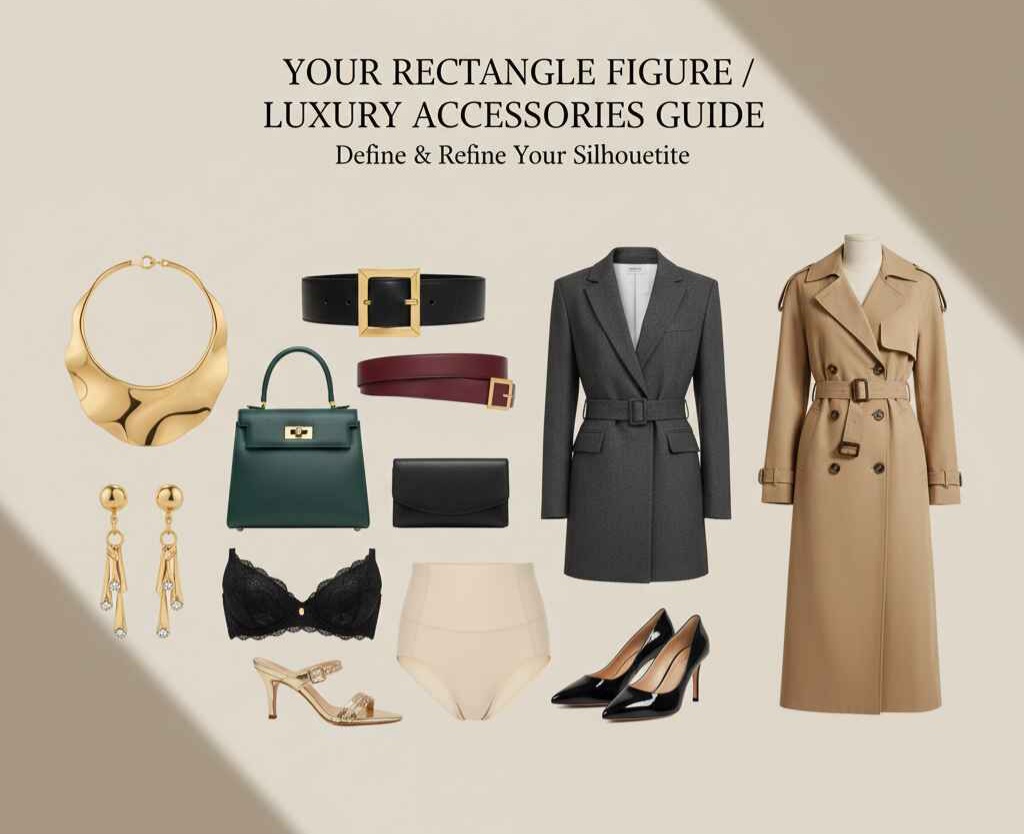
Innerwear to Wear: Supportive bras that slightly lift and create gentle projection add shape to the upper body, creating a more feminine silhouette. Padded or push-up styles (moderate, not excessive) help define the bust line. High-waisted underwear or shaping briefs subtly narrow the waist while smoothing the hips. Light-to-medium shapewear enhances curves without flattening them, particularly when wearing fitted tops or dresses. Bodysuits with strategic panels can also create soft shaping for the torso and hip area.
Innerwear NOT to Wear: Minimizer bras or overly compressive sports bras flatten the chest, emphasizing the body’s linearity. Low-rise underwear or thick elastic bands cut into the hips, creating unflattering lines. Heavy, bulky padding adds disproportionate volume to the bust. Avoid shapewear that compresses curves excessively, as this eliminates potential visual shaping for clothing.
OUTERWEAR FOR THE RECTANGLE BODY
Outerwear to Wear: Outerwear should create structure, diagonal lines, or waist definition. Fitted blazers, cropped jackets, peplum jackets, and belted coats sculpt the torso. Tailored trench coats with a cinched waist or wrap coats add curves and elegance. Moto jackets with shoulder structure and fitted length visually broaden the upper body while highlighting the waist. Layered outerwear that creates contrast at the shoulders or hips adds softness and visual interest to the straight silhouette.
Outerwear NOT to Wear: Avoid boxy blazers, oversized coats, straight-cut jackets, or thick puffers that hide the waistline and add bulk. Long, shapeless coats or cardigans flatten the torso, and double-breasted styles that do not fit the waist overwhelm the natural frame. Shapeless layering removes any opportunity to visually sculpt curves.
ACCESSORIES FOR THE RECTANGLE BODY
Belts to Wear: Medium-width or statement belts at the natural waist instantly create curves. Wrap belts or belts with soft textures highlight the torso’s narrowest point. Wearing belts over jackets, dresses, or high-waisted bottoms adds intentional shape.
Belts NOT to Wear: Thin belts may disappear visually, failing to create a waistline. Hip belts that sit below the natural waist elongate the torso and reduce the visual break. Extra-wide belts covering the midsection distort proportions.
Bags to Wear: Medium to structured handbags, shoulder bags, or crossbody bags placed slightly above the hip create a diagonal break and add softness to the linear frame. Rounded or curved bags soften sharp lines and add dimension.
Bags NOT to Wear: Oversized slouchy bags, tiny micro bags, and extra-wide crossbodies distort balance. Bags that fall exactly at the hip or add bulk flatten the waist visually.
Shoes to Wear: Pointed-toe heels, sleek pumps, strappy heels, ballet flats with almond-shaped toes, and fitted boots elongate the leg line. Shoes that feel delicate or structured add proportion and visual refinement.
Shoes NOT to Wear: Chunky boots, heavy sneakers, thick platforms, and overly square-toed shoes add weight at the bottom, emphasizing linearity. Thick ankle straps cut the line of the leg.
Jewelry to Wear: Curved or rounded jewelry, medium-sized statement pieces, teardrop or hoop earrings, and layered necklaces introduce softness. Bracelets and rings with gentle curves add elegance without overpowering the frame. Jewelry that frames the collarbone and upper torso balances linearity.
Jewelry NOT to Wear: Extremely geometric or angular designs exaggerate straight lines. Heavy chokers or oversized pieces dominate the frame. Very long earrings or blocky bracelets disrupt the flow of proportions.
Real Styling Experience -Rectangle Body Shape
The rectangle body shape is often described as “straight” or “balanced,” but what most women feel is something very different. I have worked with women who quietly felt that their body lacked definition, that outfits did not sit the way they expected, or that no matter what they wore, something felt unfinished.
This is not because the body is difficult to style. It is because the styling does not create direction.
I remember a woman who came to me saying, “Everything fits, but nothing feels special.” She wore well-fitted clothes, clean lines, nothing was technically wrong. But there was no shape being created. Her outfits followed her body exactly as it was, straight from top to bottom.
We did not change her wardrobe completely. We introduced movement, contrast, and placement.
A softly cinched waist in one outfit. Layering that added depth in another. A dress that created flow instead of falling straight. Small changes, but they changed how her body was perceived.
Within a few adjustments, she did not look “straight” anymore. She looked styled.
The truth about rectangle body styling is this. You are not working with curves. You are creating them through structure, layering, and visual movement.
Another situation I see often is overcompensation. A client once tried to add shape using extremely tight belts and very sharp cuts. Instead of creating elegance, it made her outfit feel forced and uncomfortable.
We softened everything. Gentle shaping instead of sharp cuts. Flow instead of restriction. The result felt natural again.
This is the balance you need to understand.
With a rectangle body, styling is not about forcing curves. It is about suggesting them.
Where Most Women Go Wrong
The most common mistake is wearing completely straight silhouettes from top to bottom. While they may feel safe, they remove dimension and make the body look flat.
Another mistake is ignoring the waist completely. While your waist may not be naturally defined, creating even a slight suggestion of it changes the entire structure of an outfit.
I have also seen overuse of very tight clothing. Many women assume that tighter clothes will create shape, but often they simply highlight the straightness of the body instead of enhancing it.
On the other side, overly loose clothing creates the same issue. Without structure, the body disappears into the outfit.
There is also a lack of layering. Without layers, there is no depth, and without depth, there is no visual interest.
Professional Do and Do Not Guidance
Do create shape through styling. Use belts, layering, and seam placement to suggest curves.
Do choose dresses and tops that add movement rather than falling straight.
Do use layering to create dimension. Even a simple outer layer can change your entire look.
Do experiment with textures and fabrics that add softness and variation.
Do balance your outfit visually from top to bottom.
Do not rely only on straight-cut outfits without any structure.
Do not over-tighten clothing in an attempt to create curves.
Do not hide your body in completely shapeless outfits.
Do not ignore layering. It is one of your strongest tools.
Do not keep everything minimal without adding at least one point of interest.
Practical Wardrobe Strategy
In daily life, your styling works best when it creates direction.
Tops should not just sit on your body. Look for elements like slight draping, wrap styles, or cuts that move inward at the waist. Even subtle shaping makes a difference.
Dresses should not fall in a straight line unless balanced with structure. Styles that flare slightly, wrap around, or include seams that create curves work beautifully.
Belts are one of your most effective tools, but they should be used gently. A soft definition works better than a tight, restrictive one.
Layering adds life to your outfit. Jackets, shrugs, or overlays create visual breaks that add dimension.
Bottoms should not feel disconnected. Straight pants work, but pairing them with a shaped or detailed top is important.
Footwear and accessories can also help guide attention. They add finishing points that prevent the outfit from feeling flat.
When shopping, ask yourself one simple question. Does this create shape or does it follow my body exactly. If it only follows, you may need to add structure elsewhere.
Frequently Asked Questions
1. Do I need to create curves in every outfit?
No, but you do need to create intention. When your body naturally falls in a straight line, completely unshaped outfits can make everything feel flat and unfinished. You don’t have to force curves, but you should introduce some form of structure or movement so the outfit feels complete and visually engaging.
2. Can I wear straight dresses?
Yes, but they should never feel lifeless. A straight dress works beautifully when there is some element that breaks the flatness, like layering, texture, seams, or subtle shaping. Without that, it can feel like the outfit is simply hanging rather than styling you.
3. Are belts necessary?
Not always, but they are one of your strongest tools. A belt does not just define the waist, it introduces direction and structure into an otherwise straight silhouette. Even a soft or loosely placed belt can completely shift how intentional your outfit feels.
4. Can I wear oversized clothing?
Yes, but it needs control. Oversized pieces can look effortless on you only when there is something grounding the look, like a structured bottom, a defined waist, or a fitted layer underneath. Without that balance, oversized can quickly turn into shapeless.
5. Why do some outfits feel flat?
Because they lack variation. When everything follows the same straight line, the eye has nowhere to move. Adding even one contrasting element, like a cinched waist, a layered jacket, or textured fabric, brings the outfit to life.
6. What tops suit me best?
Wrap tops, draped styles, and softly structured silhouettes work beautifully because they introduce natural curves without forcing them. Even slight shaping at the waist or bust area can make a big difference in how polished you look.
7. Can I wear bodycon outfits?
Yes, but understand what they do. Bodycon will follow your natural shape exactly, which means it may highlight straightness rather than create curves. If you want more dimension, layering or adding structure can completely change the effect.
8. What fabrics work best?
Fabrics that move slightly but still hold some structure are ideal. Very stiff fabrics can look boxy, while overly clingy fabrics can emphasize flatness. You are looking for balance, something that supports shape without restricting it.
9. Can I wear layers?
Yes, and you should. Layering is one of the easiest ways to create dimension. A simple inner and outer combination can add depth, break straight lines, and make your outfit feel styled rather than just worn.
10. What kind of dresses work best?
Wrap dresses, A-line cuts, and structured silhouettes work especially well because they naturally introduce variation into your shape. Even subtle tailoring can make a dress feel more aligned with your body.
11. Can I wear high-waisted bottoms?
Yes, they are very effective. High-waisted pieces create a visual break in your torso and help define a waistline, even if it is not naturally very pronounced.
12. Why do tight clothes not help?
Because tightness is not the same as shape. When clothing is simply tight, it follows the same straight line instead of creating variation. Structure and placement matter far more than how fitted something is.
13. Can I wear minimal outfits?
Yes, but minimal does not mean flat. Even in a simple outfit, include at least one element that adds interest, like a structured blazer, a defined waist, or a textured fabric. That is what keeps minimal styling from feeling incomplete.
14. What is the biggest mistake?
Wearing completely straight silhouettes from top to bottom without any variation. It removes all dimension and makes the outfit feel unfinished, even if every individual piece is beautiful.
15. Can I wear prints?
Yes, especially prints that create movement. Patterns can add visual interest and break the monotony of straight lines, making your outfit feel more dynamic and styled.
16. Do I need structured jackets?
They are extremely helpful. A well-cut jacket can instantly add shape, define your shoulders or waist, and give your outfit a more intentional structure.
17. Can I wear jumpsuits?
Yes, especially those that include waist definition or subtle tailoring. Without that, jumpsuits can sometimes feel too straight, but the right cut can make them incredibly flattering.
18. How do I look more feminine?
Through softness and contrast. Adding gentle draping, slight waist definition, or flowing elements introduces a sense of movement and softness that enhances your overall look.
19. Can I wear crop tops?
Yes, and they can work very well. When paired with high-waisted bottoms, they create a natural break in your silhouette, which adds dimension and visual interest.
20. What bottoms suit me best?
Straight, flared, or slightly structured bottoms work well because they either maintain balance or introduce subtle variation. The key is avoiding complete flatness.
21. Can I wear loose dresses?
Only if there is something to support them. A loose dress with no structure can feel shapeless, but adding a belt, layering, or choosing one with built-in tailoring changes everything.
22. Do I need contrast in outfits?
Yes, contrast creates movement. It can be through color, texture, or shape, but having some difference within your outfit keeps it visually engaging.
23. What necklines suit me?
Most necklines work for you, but the best ones are those that add dimension, like wrap, scoop, or layered necklines. They prevent the upper body from looking too flat.
24. Can I wear belts on every outfit?
No, only when it improves the look. Overusing belts can feel forced. The goal is not to define your waist in every outfit, but to introduce structure where needed.
25. How do I shop better?
Look for pieces that either create shape or allow flexibility in styling. Think about how each item will add dimension to your outfit rather than just how it looks on its own.
26. Can I wear fitted jeans?
Yes, especially when paired with a shaped or slightly loose top. This combination creates contrast, which is exactly what your body benefits from.
27. What is the easiest fix?
Add one intentional element. It could be a belt, a jacket, or a layered piece. That single addition can completely change how your outfit feels.
28. Do accessories help?
Yes, more than most people realise. Accessories add finishing and dimension. A simple necklace, belt, or bag can guide the eye and complete the look.
29. Should I avoid straight cuts completely?
No, straight cuts are part of your natural structure. You just need to balance them with elements that add variation so the outfit does not feel one-dimensional.
30. What is the final takeaway?
You are not trying to change your body. You are creating shape through styling. Once you understand that, dressing becomes easier, more intentional, and far more satisfying.
Final Notes on Styling the Rectangle Body
For the rectangle figure, the goal is to create curves and dimension through clothing, accessories, and structure while maintaining the natural elegance of the straight silhouette. Strategic waist definition, volume at the shoulders or hips, diagonal lines, and textured fabrics transform a straight silhouette into a soft, feminine, and sculpted S-shape. With awareness of what enhances versus what flattens, the rectangle body becomes versatile, chic, and effortlessly captivating.
More Guides You Might need
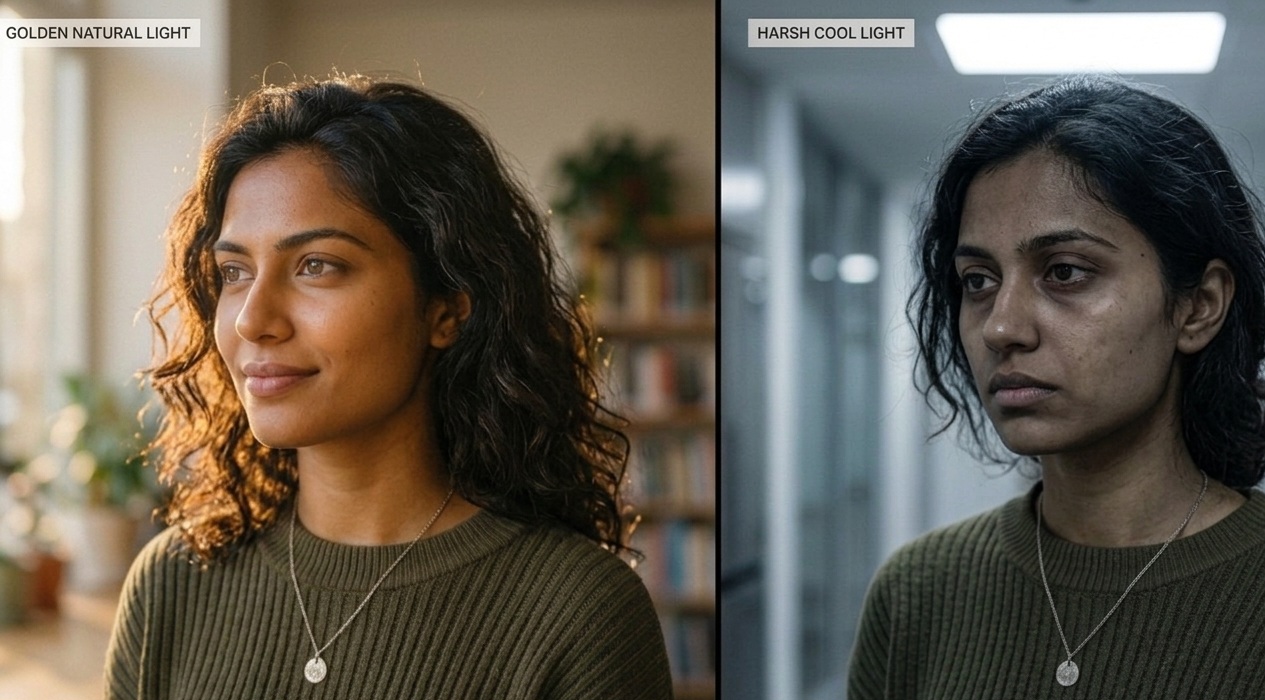
Why You Look Better in Some Lighting and Worse in Others
Why Do I Look Washed Out in Photos and How to Fix It

Why Do Bad People Seem to Win in Life?
Why Don’t I Feel Happy About My Pregnancy All the Time?
Why Does My Mind Feel So Heavy During My Period?
How to Dress Better Without Buying New Clothes

Why do I look bad in photos ? ( and what's the solution )
Is My Phone Making Me Dumb Every Day?
© 2026 Femmemalist™. All rights reserved.