Why You Look Bad in Pictures and How to Fix It Instantly

You take a photo and immediately feel something is off.
Not ugly. Not wrong. Just not like how you see yourself.
This confusion is extremely common.
And it is not about your face being bad. It is about how your face is being captured.
Why this happens in photos
Your appearance in pictures is shaped by three things:
- Camera lens distortion
- Lighting direction
- Face structure behavior
This is where face shape becomes important, not as identity but as behavior in photos.
How each face shape reacts in photos and how to fix it
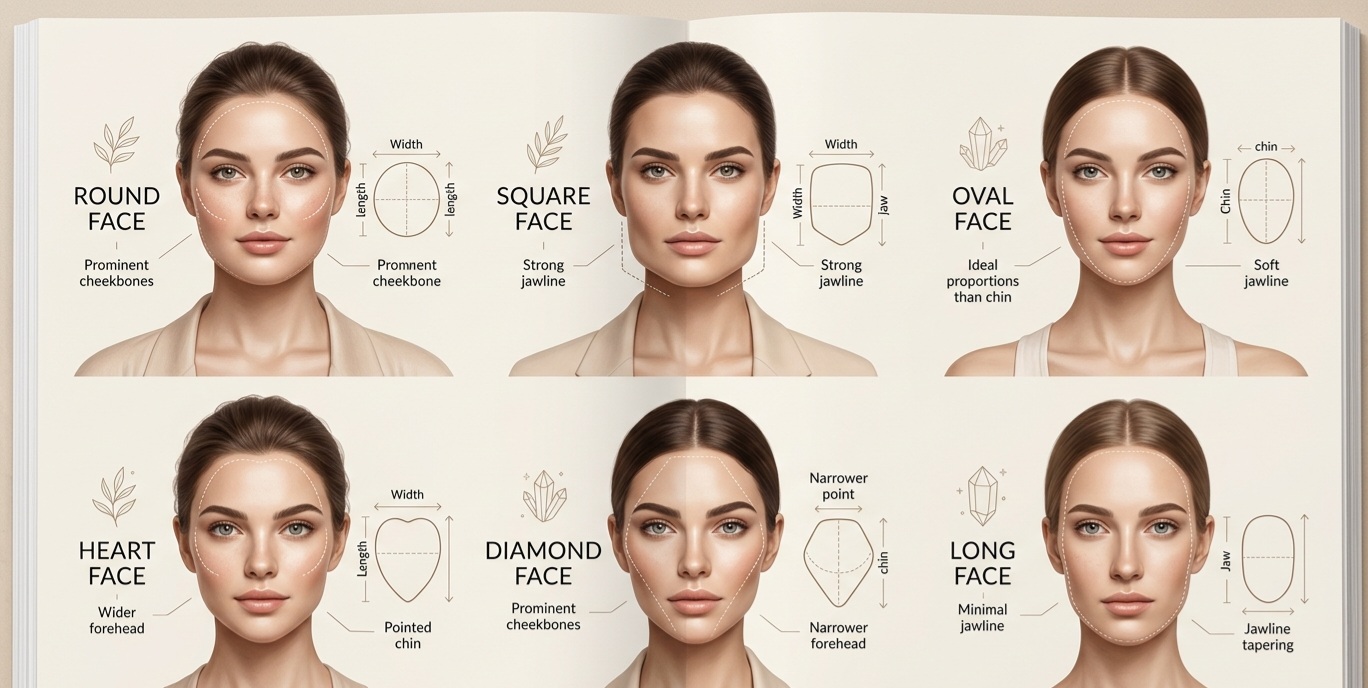
Round face
In photos, round faces often appear wider due to lens proximity.
Fix: Keep camera slightly above eye level, avoid close distance, and use slight side angle to add structure.
Square face
Strong jawlines become more dominant under harsh lighting.
Fix: Use soft lighting, avoid direct shadows on jaw, and tilt face slightly to soften angles.
Oval face
Generally balanced but can look flat in poor lighting.
Fix: Use directional light to enhance cheekbone definition and avoid overly centered framing.
Heart face
Forehead can look wider and chin can appear smaller in selfies.
Fix: Slight downward camera angle and hair framing around forehead helps balance proportions.
Diamond face
Cheekbones can look overly sharp in flash lighting.
Fix: Use soft natural light and avoid direct flash to reduce harsh contrast.
Long face
Faces appear stretched vertically in close selfies.
Fix: Increase camera distance and use horizontal framing instead of tight vertical shots.
The hidden truth most people miss
You are not changing your face in photos.
You are changing how your face structure is interpreted.
Once you understand this, you stop blaming yourself and start adjusting technique.
Simple universal fixes that work for everyone
- Raise camera slightly above eye level
- Use soft natural lighting near a window
- Avoid extremely close selfies
- Turn face slightly instead of full front
- Relax jaw and facial tension
What changes after this understanding
Instead of feeling confused after every photo, you start noticing patterns.
And once you see patterns, you can control outcomes.