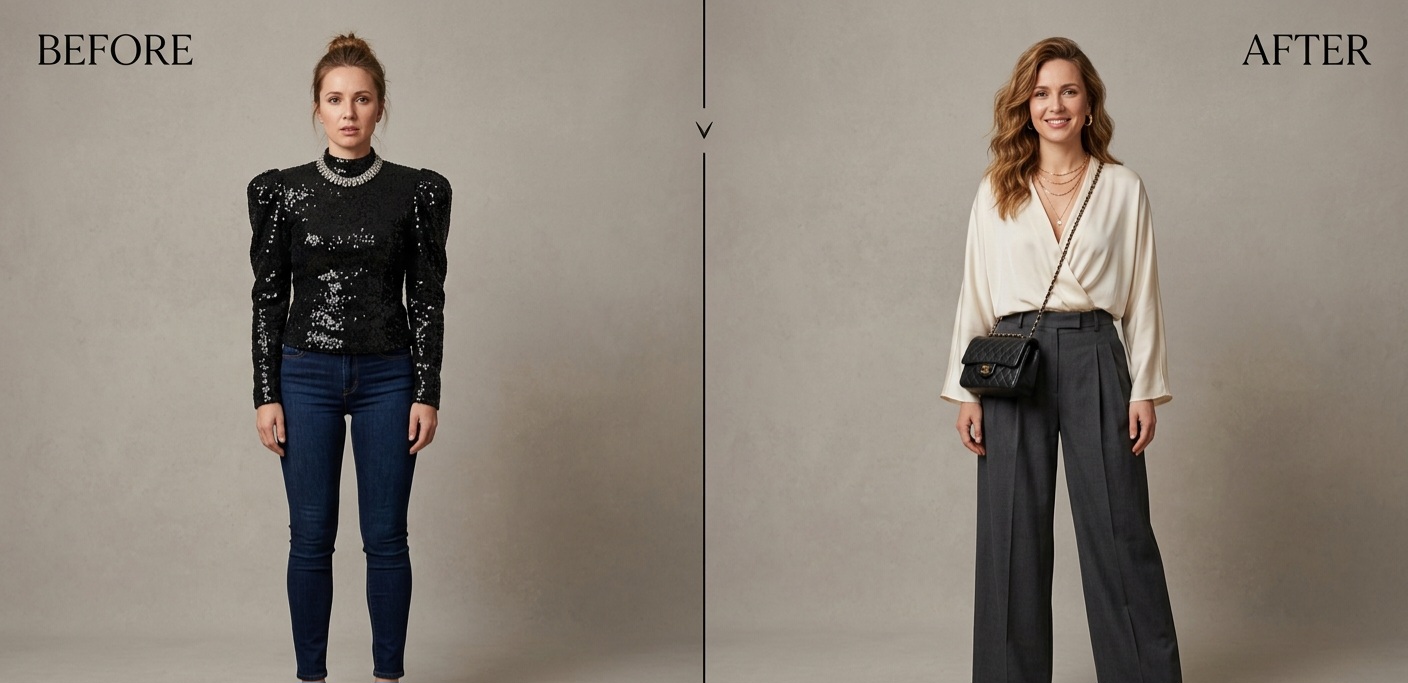
INVERTED TRIANGLE BODY TYPE: COMPLETE STYLING & GLOW-UP GUIDE FOR WOMEN
How to Balance Proportions with Confidence and Structure
The inverted triangle body type carries a naturally strong upper body, and styling it well is about balance, not reduction.
Many women search for answers like how to dress an inverted triangle body shape, what clothes suit broad shoulders, or how to create balance between the upper and lower body. The goal is not to hide your structure. It is to distribute attention in a way that feels visually even.
An inverted triangle body is typically defined by broader shoulders or bust with comparatively narrower hips and lower body. This creates a top-heavy visual impression, which means styling choices directly affect how balanced or unbalanced the body appears.
With this body type, the focus is not on changing your shape. It is on guiding where the eye moves.
This is where small details matter. Necklines can either widen or soften the shoulders. Sleeve structure can add or reduce visual weight. Bottom silhouettes can either ground the body or make the upper half appear more dominant.
I have seen women feel restricted in their clothing choices simply because they were trying to minimise their upper body instead of balancing it. When styling shifts toward proportion rather than reduction, everything becomes easier.
When done correctly, the result is immediate. The body looks more proportionate. The lower half feels more present. The overall silhouette appears stable, not top-heavy.
Inverted triangle styling is about balance through distribution, not hiding your strength.
This section is designed to help you understand how to create that balance. From tops and necklines to bottoms, structure, and fabric movement, each element plays a role in how your proportions are perceived.
You do not need to change your body. You need to understand how to support it visually.
When that happens, your presence feels grounded, confident, and naturally put together.
Understanding the Inverted Triangle Body
The inverted triangle body shape is characterized by a broader upper body, including wide shoulders and a fuller bust, paired with a narrower waist and hips. The lower body is proportionally smaller, with slender legs and a leaner pelvis. Scientifically, this shape is influenced by a combination of genetics and muscle distribution, with a tendency for stronger upper body musculature and less fat storage in the lower body. The inverted triangle silhouette is naturally athletic and strong, often exuding confidence and presence. The key to styling this body type is balancing the broad upper body with the narrower lower body, creating a proportional, harmonious, and elegant overall appearance.
Strengths of the Inverted Triangle Body
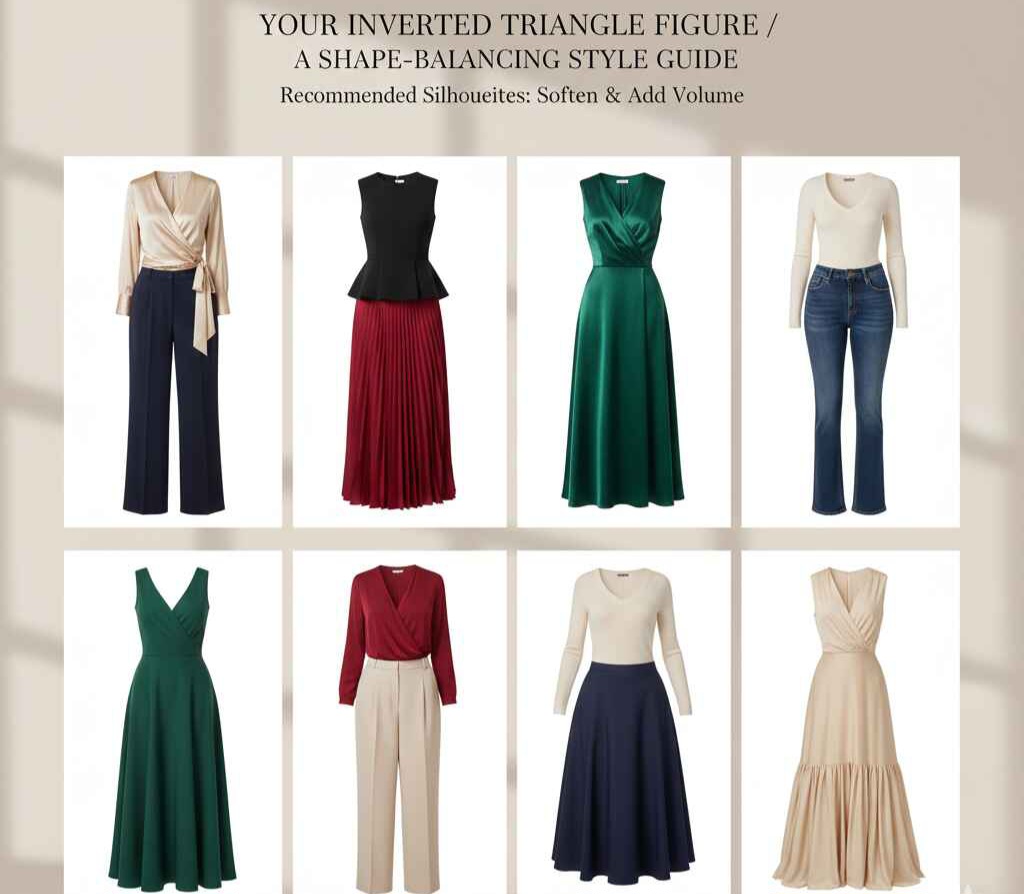
The inverted triangle body carries a striking and athletic presence, with naturally sculpted shoulders and arms. Tops, jackets, and structured clothing fit easily across the shoulders without distortion. Long, slim legs are a natural asset, and the narrow lower body allows for experimentation with volume in pants, skirts, and trousers to create balance. Additionally, the athletic frame can carry bold patterns, statement sleeves, and vibrant colors on the upper body without appearing disproportionate. With proper styling, the inverted triangle figure can achieve a classic, hourglass illusion by adding volume and interest to the lower half.
Challenges of the Inverted Triangle Body
The primary challenge is the visual imbalance caused by broad shoulders and a larger upper body. Tight-fitting tops, horizontal patterns, or heavy shoulder embellishments can exaggerate width, making the torso appear top-heavy. Conversely, too-narrow bottoms can leave the lower body looking underdeveloped relative to the upper body. Without careful styling, the body may appear blocky, with the shoulders dominating the silhouette. Proper balance involves creating visual weight on the lower half, enhancing the waistline, and softening the upper torso with strategic cuts and accessories.
What to Accentuate
Focus on enhancing the lower body and defining the waist to create a more proportional look. A-line skirts, wide-leg trousers, and flared pants add volume to the hips and balance broad shoulders. Fitted tops and tapered jackets emphasize the waist, while vertical lines elongate the torso. Accessories such as belts, bags, and shoes can further direct attention downward, creating harmony and proportion. Subtle shoulder detailing or neckline adjustments can soften upper body dominance without exaggerating width.
What NOT to Accentuate
Avoid tops with excessive shoulder padding, horizontal stripes across the chest, or large patterns at the upper body, as these increase the perceived width of the shoulders. Heavy or stiff fabrics that cling to the upper torso exaggerate the blocky appearance. Extremely narrow bottoms that fail to balance the shoulders make the upper body appear disproportionately wide. Anything that draws excessive attention to the shoulders without creating counterbalance should be avoided.
TOPS FOR THE INVERTED TRIANGLE BODY
Tops to Wear: V-necks, deep scoop necks, and wrap tops elongate the upper torso and draw attention toward the waist. Fitted blouses, structured tops, and open-front jackets define the midsection without adding bulk to the shoulders. Avoid high-neck collars or boat necks that emphasize shoulder width. Subtle vertical seams, draping, and light fabrics help soften the upper torso while highlighting a defined waistline. Shorter sleeve cuts or cap sleeves reduce shoulder dominance, creating balance.
Tops NOT to Wear: Wide boat necks, heavy shoulder embellishments, puffed sleeves, and horizontal patterns across the chest exaggerate shoulder width. Stiff, boxy tops without tapering over the waist amplify the top-heavy effect. Oversized or long tops that lack definition hide the waist and increase the perception of upper body bulk.
BOTTOMS FOR THE INVERTED TRIANGLE BODY
Bottoms to Wear: Flared pants, wide-leg trousers, A-line skirts, and pleated skirts add volume to the lower body, balancing broad shoulders. Bright colors, patterns, or textures on the bottom draw the eye downward. Fitted trousers with slight flare, or bottoms with pockets near the hips, enhance proportionality. High-waisted cuts create a visible waistline, contributing to a subtle hourglass effect.
Bottoms NOT to Wear: Skinny, ultra-tight pants, low-rise leggings, or narrow skirts can make the lower body look undersized compared to the upper body. Heavy fabrics that cling to the lower body without shaping may create a disproportionate visual. Avoid vertical striping that lengthens the legs without adding visual weight, as this can exaggerate shoulder dominance.
DRESSES FOR THE INVERTED TRIANGLE BODY
Dresses to Wear: Fit-and-flare, A-line, and wrap dresses emphasize the waist and create visual volume in the lower body. Empire waist dresses that flow gently from the bust highlight the waistline while softening shoulder width. Dresses with light detailing, vertical seams, or subtle patterns at the lower half create balance and elongate the silhouette. Necklines such as V-neck or sweetheart draw attention inward and downward.
Dresses NOT to Wear: Shift dresses, straight-cut sheath dresses, and tops-heavy dresses emphasize broad shoulders. Drop-waist or bodycon styles that cling to the upper torso without flaring over the hips increase the top-heavy appearance. Heavy embellishments at the shoulders or chest create disproportionate visual weight.
INNERWEAR FOR THE INVERTED TRIANGLE BODY
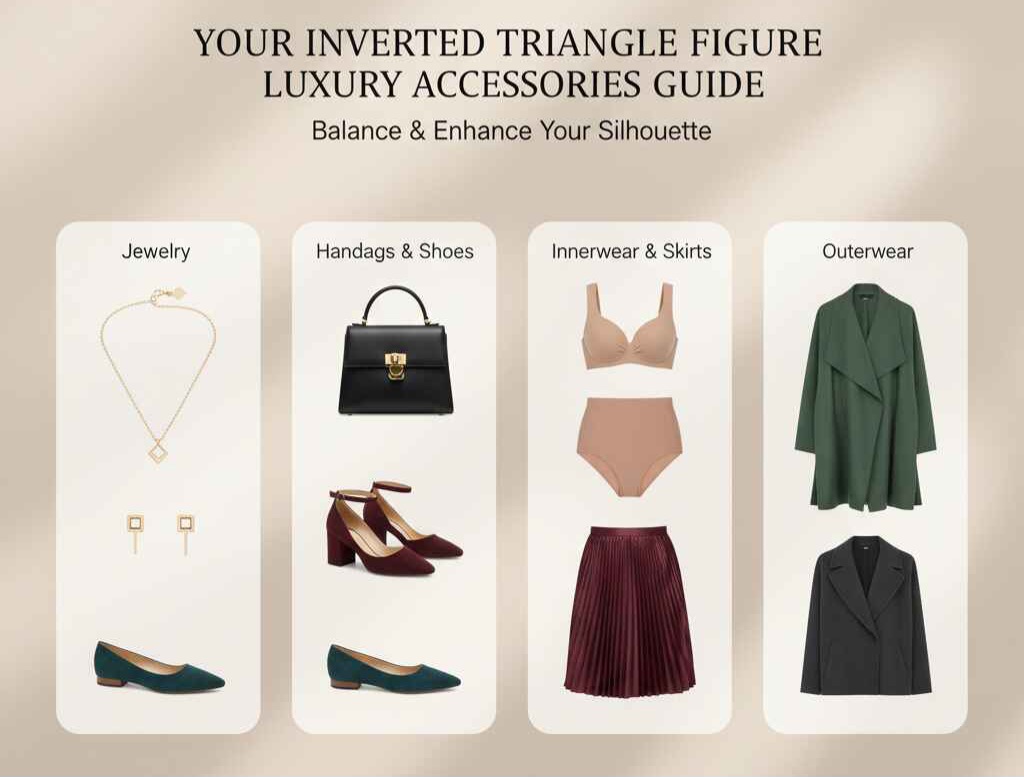
Innerwear to Wear: Supportive bras without excessive padding maintain natural bust proportion without adding bulk. Lightly padded or contour bras provide shape while softening chest prominence. High-waisted or shaping briefs that gently enhance the hips and waist balance the upper body. Bodysuits with strategic paneling can create symmetry, smooth lines, and define the waist.
Innerwear NOT to Wear: Minimizer bras or heavy padded bras exaggerate chest width. Low-rise underwear that reduces hip visibility or compresses the lower body fails to provide proportional balance. Avoid shapewear that focuses excessively on the upper body while leaving the lower body minimal.
OUTERWEAR FOR THE INVERTED TRIANGLE BODY
Outerwear to Wear: Single-breasted jackets, cropped or open-front coats, and belted trench coats highlight the waist and create a structured lower frame. Outerwear that flares slightly from the waist down, or adds volume at the lower half, balances broad shoulders. Light fabrics, vertical lines, and strategic tapering contribute to a harmonious silhouette.
Outerwear NOT to Wear: Double-breasted jackets, shoulder-padded coats, oversized puffers, and long straight-cut outerwear add bulk to the shoulders. Boxy outerwear without tapering fails to balance the upper and lower body.
ACCESSORIES FOR THE INVERTED TRIANGLE BODY
Belts to Wear: Medium-width or statement belts at the natural waist highlight a defined midsection. Belts with subtle textures or patterns that sit at the waist enhance the visual proportionality of the figure.
Belts NOT to Wear: Low-slung belts or very wide belts that cut across the waist and hips visually shorten the torso and fail to balance the shoulders. Thin belts that blend into the outfit do not define the waist effectively.
Bags to Wear: Bags that fall at or slightly below the hip, structured handbags, crossbody bags with lower placement, and bags with volume at the bottom draw attention downward, balancing upper body width.
Bags NOT to Wear: Top-heavy bags, shoulder bags that add volume near the shoulders, and oversized totes exacerbate upper-body dominance. Avoid tiny micro bags that fail to provide visual counterbalance.
SHOES FOR THE INVERTED TRIANGLE BODY
Shoes to Wear: Pointed-toe pumps, ankle-strap heels, boots with slight flare, and shoes with details that add width at the lower leg balance broad shoulders. Lighter, elongated shoe designs complement proportionality.
Shoes NOT to Wear: Chunky platforms, ankle-heavy boots, and clunky shoes emphasize vertical straightness without balancing the top-heavy frame. Avoid shoes that are overly minimal or heavy near the ankles without creating proportional width.
JEWELRY FOR THE INVERTED TRIANGLE BODY
Jewelry to Wear: Necklaces with long, vertical pendants, teardrop earrings, and jewelry that draws attention downward help balance the silhouette. Soft, curved bracelets and rings complement the upper body without adding bulk.
Jewelry NOT to Wear: Heavy shoulder-length chokers, oversized earrings that widen the upper body, or chunky bracelets that emphasize shoulder and chest width can exaggerate top-heaviness. Avoid jewelry that focuses attention on the shoulders.
Real Styling Experience -Inverted Triangle Body Shape
The inverted triangle body shape is powerful, structured, and naturally striking. But in real life, I have seen many women with this shape feel the exact opposite. Instead of seeing strength, they feel that their shoulders are “too much,” that tops never sit softly, or that their upper body dominates every outfit.
This is not a problem with the body. It is a problem with how the outfit distributes attention.
I remember working with a woman who avoided sleeveless tops completely. She believed her shoulders looked too broad, so she constantly tried to cover them with high necklines, stiff fabrics, and heavy layers. Ironically, those very choices made her upper body look even stronger and more closed.
We did something simple. We opened the neckline. We softened the fabric. We reduced structure on the shoulders and allowed the outfit to move instead of hold.
The change was immediate. Her upper body no longer felt heavy. It felt fluid, balanced, and relaxed.
The truth about inverted triangle styling is this. You are not trying to reduce your upper body. You are redistributing visual weight so the entire body feels balanced.
Another situation I often see is neglecting the lower body. A client once wore very minimal bottoms with highly structured tops. The result was clear imbalance. All attention stayed at the top.
We shifted focus downward. Added volume, texture, and movement to the lower half. The outfit suddenly felt complete. Not because we hid anything, but because we balanced everything.
This is the key difference. You are not correcting your shape. You are guiding attention.
Where Most Women Go Wrong
The most common mistake is adding too much structure to the upper body. Shoulder pads, stiff fabrics, high necklines, and heavy detailing all increase visual width.
Another mistake is keeping the lower body too minimal. Skinny silhouettes without volume or movement can make the upper body appear even broader in comparison.
I have also seen overuse of dark colors on top with very light bottoms without proper balance. While contrast can work, incorrect placement can exaggerate proportions.
Necklines are often misunderstood. Closed necklines tend to compress the upper body, while open necklines allow space and softness.
And then there is fabric choice. Stiff fabrics hold shape and increase presence, while softer fabrics allow movement and reduce visual weight.
Professional Do and Do Not Guidance
Do keep your upper body soft and fluid. Choose fabrics that move rather than hold.
Do use open necklines to create space. V-necks, scoop necks, and softer shapes work well.
Do add visual interest to your lower body through volume, texture, or structure.
Do use layering strategically, especially below the waist.
Do choose bottoms that create movement and balance.
Do not add heavy structure to your shoulders.
Do not use very stiff fabrics on the upper body.
Do not rely only on minimal bottoms.
Do not overuse high, closed necklines.
Do not concentrate all detailing on the upper half.
Frequently Asked Questions
1. Should I avoid sleeveless tops?
Not at all. You do not need to hide your shoulders, you need to soften how they are presented. I have worked with women who avoided sleeveless styles completely, thinking it made them look broader. When we shifted to softer armholes, fluid fabrics, and open necklines, the same sleeveless tops started to feel elegant instead of overwhelming.
2. What necklines suit me best?
V-necks, scoop necks, and gently open necklines work beautifully because they create space and draw the eye inward rather than outward. They break the horizontal line of the shoulders and bring a sense of balance to the upper body.
3. Can I wear high necks?
You can, but be intentional. High necklines tend to add visual weight to the upper body. If you choose them, keep the fabric soft and balance it with movement or volume in the lower half so the outfit does not feel top-heavy.
4. What fabrics work best?
Soft, fluid fabrics on the upper body make a noticeable difference. Materials that drape instead of holding shape allow your frame to feel lighter. I often guide clients toward fabrics that move when they move, because that softness naturally reduces visual width.
5. Can I wear structured tops?
Yes, but structure should be controlled. Avoid anything that builds out the shoulder line further, such as heavy padding or stiff tailoring. Gentle structure at the waist is helpful, but excess structure at the shoulders creates imbalance.
6. What bottoms suit me best?
Bottoms with volume, texture, or visual presence. This could be wide-leg trousers, A-line skirts, pleated styles, or fabrics that hold some weight. The goal is to bring the lower body into equal visual importance.
7. Can I wear skinny jeans?
Yes, but they need support from the rest of the outfit. Pair them with softer, slightly relaxed tops so the upper body does not feel too dominant. Balance is always the goal.
8. Why do some outfits feel top-heavy?
Because too much attention is sitting on the upper body. This can come from stiff fabrics, heavy detailing, or closed necklines. When the lower half is quieter, the imbalance becomes more noticeable.
9. Can I wear blazers?
Absolutely, but choose softer, less rigid blazers. I once styled a client who loved blazers but felt uncomfortable in them. We replaced her sharp, padded pieces with relaxed tailoring, and suddenly the same idea worked beautifully on her body.
10. Are belts helpful?
Yes, belts create a transition point between upper and lower body. They help guide the eye downward and break the dominance of the upper half. Even a subtle belt can make a visible difference.
11. Can I wear prints on top?
Yes, but keep them refined and not overly bold. Loud or dense prints on the upper body can increase visual weight. Softer patterns maintain interest without overwhelming your frame.
12. Where should I place detail?
Primarily on the lower body. This could be pleats, texture, layering, or even color. When detail shifts downward, your entire silhouette feels more balanced and grounded.
13. Can I wear wide-leg pants?
They are one of your strongest options. Wide-leg pants add presence to the lower body and naturally counterbalance broader shoulders. They create a sense of proportion that feels effortless.
14. What dresses suit me best?
Dresses that remain softer on top and fuller or more structured below. A-line and fit-and-flare styles work especially well because they guide attention downward while maintaining elegance.
15. Can I wear crop tops?
Yes, especially when paired with high-waisted bottoms that add structure or volume. The key is making sure the lower half carries enough visual weight to balance the upper body.
16. Why do stiff tops look heavy?
Because they hold their shape instead of flowing with your body. This adds width and makes the upper half feel more dominant. Softness is what brings ease and balance.
17. Can I wear layers?
Yes, and layering works particularly well when it adds depth to the lower body. Even subtle layering can shift the visual focus downward and create harmony.
18. What footwear works best?
Footwear that has presence. Structured shoes, slightly bold designs, or styles with weight help anchor your look and complete the balance from top to bottom.
19. Can I wear minimal outfits?
Yes, but minimal does not mean ignoring balance. Even the simplest outfit should consider proportion, otherwise it can feel slightly incomplete.
20. What is the biggest mistake?
Adding more structure or detail to the upper body without supporting the lower half. This is where most imbalance begins.
21. Should I avoid shoulder pads?
In most cases, yes. They exaggerate what is already naturally strong. If used, they should be extremely subtle and balanced carefully.
22. Can I wear halter necks?
You can, but they naturally highlight the shoulders. If you choose them, make sure the rest of your outfit compensates with volume or structure below.
23. What jackets suit me?
Soft, unstructured jackets or those with gentle shaping. They allow your frame to breathe instead of adding rigidity.
24. Can I wear skirts?
Yes, especially skirts with movement and volume. They are one of the easiest ways to create balance without overthinking the outfit.
25. Do accessories matter?
Very much. Accessories can guide attention. A statement shoe, a structured bag, or even placement of detail can shift how the entire outfit is perceived.
26. Can I wear fitted tops?
Yes, as long as they are not overly structured or stiff. Fitted does not mean rigid. Soft shaping is what works best.
27. What is the easiest fix?
Add volume or presence to the lower body. Even a small adjustment here can transform the entire outfit.
28. Do colors matter?
Yes. Darker tones on top and lighter or more expressive tones on the bottom can help redistribute visual weight and create balance naturally.
29. How do I shop better?
Look beyond trends and focus on proportion. When you start noticing where attention is going in an outfit, shopping becomes much more intuitive.
30. What is the final takeaway?
Your upper body already carries strength and structure. Your styling is not meant to reduce it, but to balance it. When your lower half is given equal presence, your entire silhouette feels calm, confident, and complete.
Final Notes on Styling the Inverted Triangle Body
The inverted triangle body’s styling goal is to balance broad shoulders with a narrower lower body, define the waist, and create proportional harmony. Strategic use of flared pants, A-line skirts, vertical lines, waist belts, and downward-drawing accessories softens shoulder dominance and highlights lean legs. Clothing, layering, and accessories should guide the eye downward while accentuating the waistline, producing a balanced, elegant, and confident silhouette.
More Guides You Might need
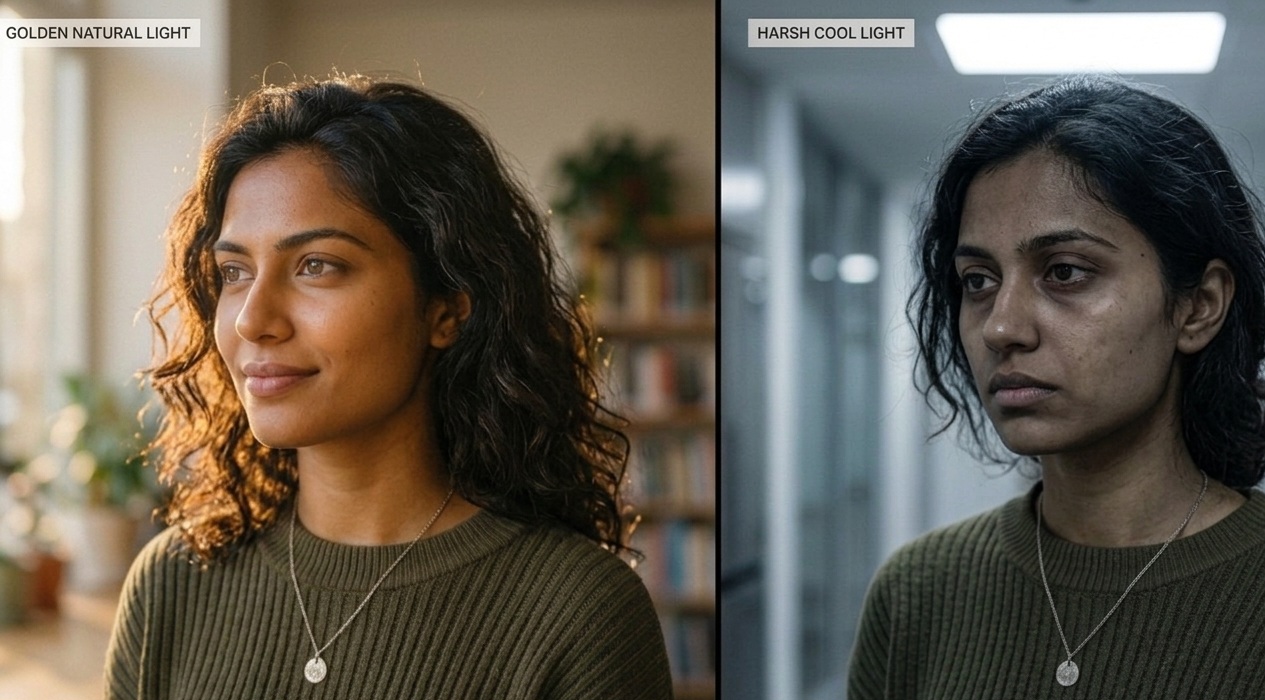
Why You Look Better in Some Lighting and Worse in Others
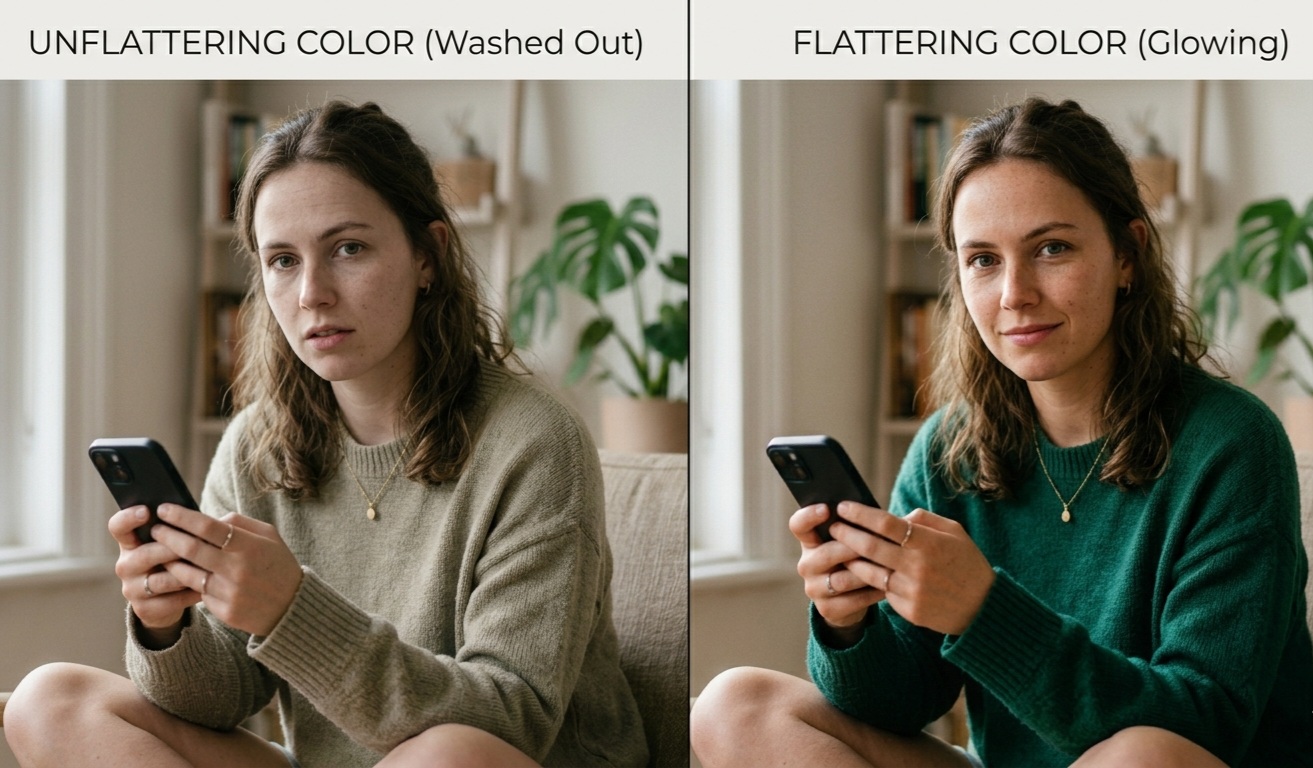
Why Do I Look Washed Out in Photos and How to Fix It
Why Do Bad People Seem to Win in Life?
Why Don’t I Feel Happy About My Pregnancy All the Time?
Why Does My Mind Feel So Heavy During My Period?
How to Dress Better Without Buying New Clothes
Is My Phone Making Me Dumb Every Day?

Why do I look bad in photos ? ( and what's the solution )
© 2026 Femmemalist™. All rights reserved.