NEUTRAL UNDERTONE – THE COMPLETE ADVANCED MASTER GUIDE
Neutral undertone is often misunderstood as “easy to style,” but in reality, it requires the most precision.
Many women search for answers like how to identify neutral undertone, what colors suit neutral skin tone, or whether gold or silver jewelry works better. The challenge is not limitation. It is selection.
Over time, I have worked with people who felt their outfits were technically correct, yet something did not fully come together. The fit was right, the effort was present, but the overall result lacked cohesion. In most cases, the issue was not style. It was alignment between color temperature, accessories, and subtle details.
Once these elements were adjusted, the shift was immediate. Skin appeared clearer. Features looked more defined. Outfits felt complete without adding complexity. This is why undertone-based styling is not about trends or rules. It is about removing small mismatches that quietly affect your overall appearance.
Neutral undertone gives you flexibility, but it also requires control.
The selections included here are based on patterns that consistently work for neutral undertones across lighting conditions, environments, and styling combinations. If you prefer not to analyse every detail each time, you can explore curated options that are already balanced in tone, helping you choose with clarity and consistency.
What Neutral Undertone Actually Is
Neutral undertone means your skin carries a balanced mix of warm and cool pigments beneath the surface. It does not strongly lean pink, and it does not strongly lean golden. It sits in between.
This does not mean every color automatically suits you. It means both warm and cool tones can work, but only when they are chosen with balance.
Many people with neutral undertones notice that both gold and silver jewelry can look harmonious. Veins may appear blue-green. Foundations labeled neutral tend to blend naturally, while overly pink or overly yellow bases may appear slightly off.
Neutral undertone skin reflects light in a balanced way. It does not have the sharp cool clarity of cool undertones or the deep golden warmth of warm undertones. Instead, it appears even, composed, and adaptable.
When styled correctly, neutral undertone looks refined, polished, balanced, and naturally cohesive.
When pushed too far into warm or cool extremes, it can appear slightly dull, uneven, or mismatched.
Neutral undertone does not need correction. It needs balance, moderation, and intentional combinations.
Why Color Reacts Differently on Neutral Skin
Because your skin holds both warm and cool pigments, it reacts to extremes.
If you wear very icy blue, your skin may appear slightly pinker. If you wear heavy mustard, your skin may appear slightly more yellow.
Neither situation is disastrous, but both shift your balance.
Neutral undertone thrives in colors that sit in the middle of the spectrum. Muted shades. Balanced tones. Colors that are not overly blue and not overly yellow.
Core Color Principle for Neutral Undertone
Avoid temperature extremes near your face. Choose colors that feel softened or slightly muted. Balance temperature across your entire outfit.
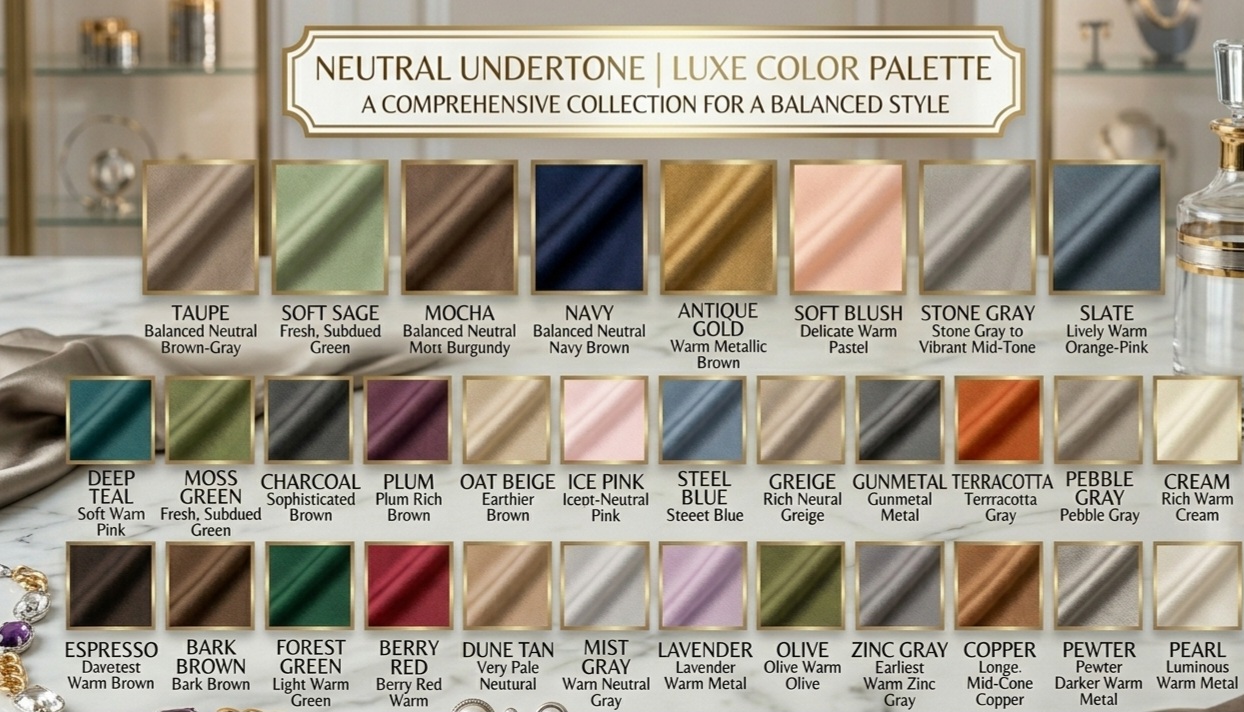
Neutral Undertone Luxe Color Palette
Neutral undertones can wear both warm and cool shades. The following balanced palette enhances the natural harmony of neutral complexions while keeping outfits refined and versatile.
- Taupe – A balanced brown-gray neutral that works beautifully for coats, trousers, and knitwear. Alternative: Mushroom Brown.
- Soft Sage – A fresh muted green that creates a calm and sophisticated look. Alternative: Light Sage Green.
- Mocha – A rich neutral brown perfect for jackets, trousers, and dresses. Alternative: Cocoa Brown.
- Navy – A classic deep blue that works as a refined neutral for formal wear. Alternative: Midnight Blue.
- Antique Gold – A warm metallic gold ideal for accessories and evening outfits. Alternative: Vintage Gold.
- Soft Blush – A delicate pastel pink that gently brightens neutral complexions. Alternative: Ballet Pink.
- Stone Gray – A clean mid-tone gray used in tailoring and structured clothing. Alternative: Ash Gray.
- Slate – A deep muted blue-gray that adds subtle depth to outfits. Alternative: Steel Slate.
- Deep Teal – A rich blue-green shade that looks elegant on neutral undertones. Alternative: Dark Teal.
- Moss Green – A natural earthy green ideal for casual outfits. Alternative: Fern Green.
- Charcoal – A sophisticated dark gray used in formal clothing. Alternative: Graphite Gray.
- Plum – A rich purple shade that adds depth and elegance. Alternative: Aubergine.
- Oat Beige – A soft earthy beige perfect for sweaters and trousers. Alternative: Almond Beige.
- Ice Pink – A cool soft pink that lightens darker color combinations. Alternative: Dusty Pink.
- Steel Blue – A cool muted blue that pairs beautifully with neutral tones. Alternative: Slate Blue.
- Greige – A blend of gray and beige that works with nearly every outfit. Alternative: Taupe Gray.
- Gunmetal – A dark metallic gray perfect for accessories and evening looks. Alternative: Pewter Gray.
- Terracotta – A warm earthy orange-red that adds richness to outfits. Alternative: Burnt Clay.
- Pebble Gray – A soft natural gray that keeps outfits relaxed and modern. Alternative: Light Stone Gray.
- Cream – A warm soft white perfect for shirts, dresses, and layering pieces. Alternative: Off-White.
- Espresso – A deep dark brown ideal for leather jackets and footwear. Alternative: Coffee Brown.
- Bark Brown – A rugged earthy brown that works well in coats and boots. Alternative: Chestnut Brown.
- Forest Green – A deep natural green that looks rich and sophisticated. Alternative: Pine Green.
- Berry Red – A vibrant berry tone that adds bold color to outfits. Alternative: Cranberry Red.
- Dune Tan – A pale sandy neutral perfect for summer clothing. Alternative: Sand Beige.
- Mist Gray – A soft warm gray that balances brighter shades. Alternative: Dove Gray.
- Lavender – A soft gentle purple that adds elegance to outfits. Alternative: Lilac.
- Olive – A muted earthy green that blends naturally with neutral palettes. Alternative: Dusty Olive.
- Zinc Gray – A metallic gray shade ideal for structured clothing. Alternative: Steel Gray.
- Copper – A glowing warm metal tone perfect for accessories. Alternative: Rose Copper.
- Pewter – A darker metallic gray often used in jewelry and belts. Alternative: Antique Silver.
- Pearl – A luminous soft neutral white ideal for elegant outfits. Alternative: Ivory.
Neutral Undertone Outfit Combinations
- Navy + Cream + Antique Gold
- Mocha + Oat Beige + Copper
- Taupe + Soft Blush + Pearl
- Stone Gray + Berry Red + Pewter
- Charcoal + Ice Pink + Gunmetal
- Forest Green + Dune Tan + Antique Gold
- Steel Blue + Greige + Pearl
- Olive + Cream + Copper
- Terracotta + Oat Beige + Bark Brown
- Lavender + Mist Gray + Pewter
Colors That Can Create Imbalance
Even though neutral undertones are flexible, certain extreme shades can push the skin too far in one direction.
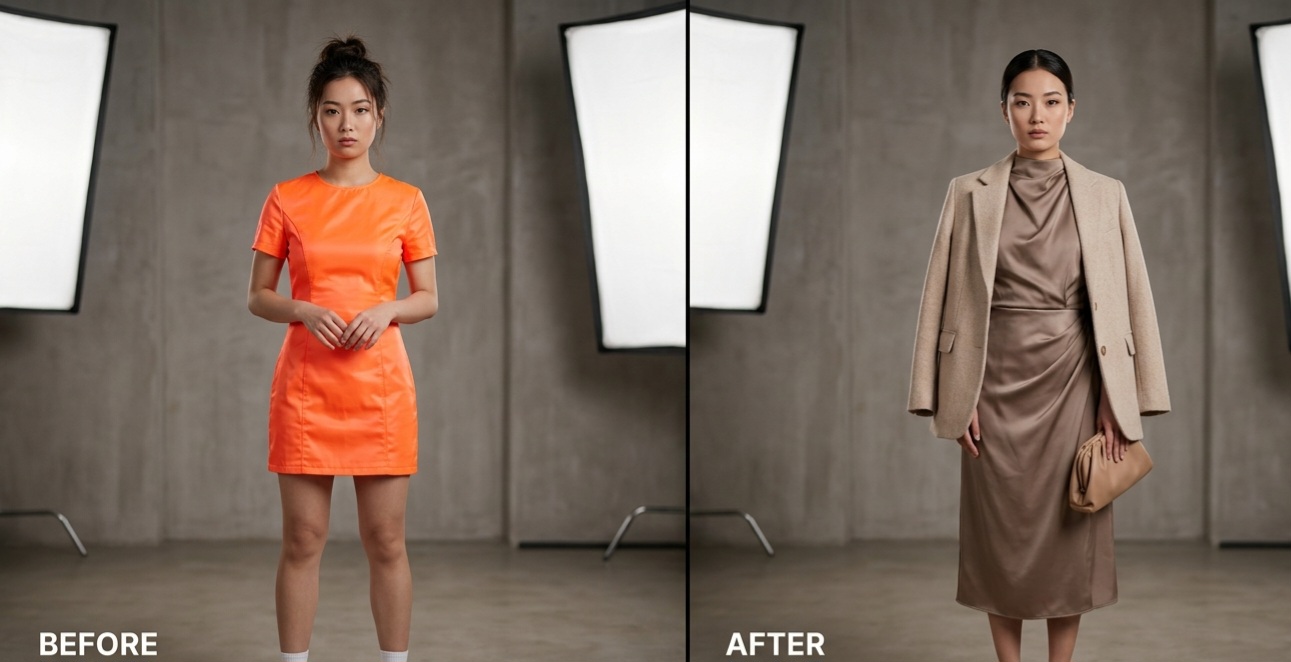
Neon shades, extremely icy pastels, very mustard-heavy yellows, bright coral, and very warm orange tones often exaggerate either warmth or coolness.
When these colors sit directly near the face, they can create subtle imbalance where the complexion appears slightly pinker, slightly yellow, or slightly dull.
The issue is not that these colors are forbidden, but that they need to be handled carefully so the natural equilibrium of neutral skin is preserved.
How to Apply This in Daily Life
College or Casual Settings
Choose taupe tops instead of pure beige. Choose medium blue denim instead of icy denim. Choose dusty rose instead of hot pink. Choose soft teal instead of mint.
These simple substitutions help maintain visual balance while still keeping outfits interesting and stylish.
Office Environment
Neutral undertone thrives in structured balanced palettes.
Grey trousers with a dusty rose blouse create a calm professional impression. A navy blazer paired with a soft white shirt appears polished without looking too cold.
A taupe suit can often appear more balanced than very warm camel or extremely cool charcoal.
Avoid placing overly warm beige or overly cool steel blue directly near the face in office lighting.
Professional Authority Strategy
Neutral undertones communicate adaptability and composure when styled correctly. Because your complexion naturally holds both warm and cool pigments, balanced color combinations often project emotional steadiness and quiet confidence.
In professional environments, extremely high contrast outfits such as stark black and white can sometimes appear slightly harsh. A softer contrast such as navy paired with white or grey paired with dusty rose tends to appear more harmonious.
These balanced palettes create the impression of strategic thinking, calm leadership, and composure under pressure.
Photography Strategy
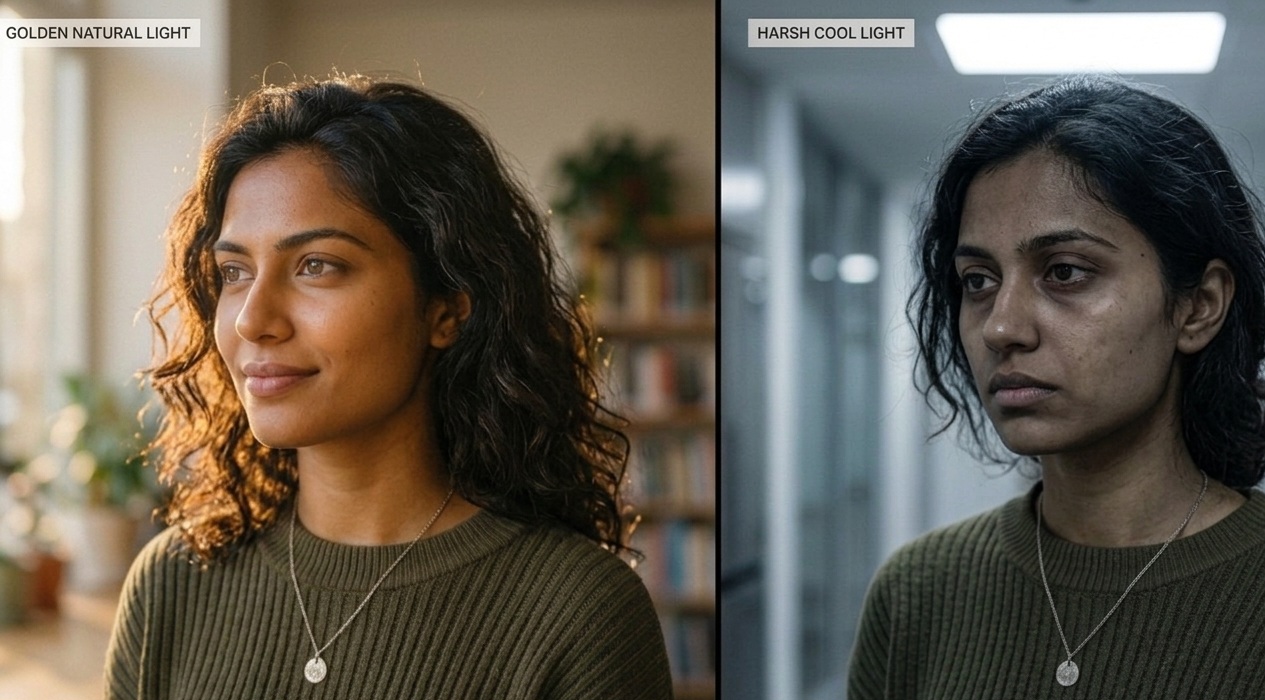
Lighting conditions can influence how neutral undertone skin appears in photos. Under warm indoor lighting, extremely mustard shades or heavy gold tones near the face may push the complexion slightly yellow.
Under cool LED lighting, very icy lavender or steel blue near the face may make the complexion appear slightly pink.
Balanced shades such as true red, muted burgundy, soft teal, taupe, and balanced navy tend to photograph beautifully on neutral undertones.
Wedding and Formal Styling
Neutral undertones perform beautifully in formal environments because they can support both warm and cool metallic elements.
True red gowns look powerful and balanced. Muted burgundy often photographs exceptionally well in evening lighting. Soft champagne fabrics work nicely as long as the tone is not too yellow.
Silver jewelry also works well provided the finish is not extremely icy. Neutral undertones tend to shine most when metallic tones remain softly balanced.
Fabric and Texture Interaction
Neutral undertones adapt well to both soft and structured fabrics. Because your undertone balance is already stable, texture becomes an excellent styling tool.
Silk in muted tones appears refined and elegant. Matte fabrics support balance and sophistication. Velvet in burgundy or teal can create beautiful depth for formal settings.
Highly shiny neon fabrics near the neckline should be avoided because they exaggerate temperature extremes.
Makeup Application Logic
Foundation
Neutral base foundations blend most naturally. Strongly pink foundations may appear slightly cool while strongly yellow bases may appear overly warm.
Concealer
Balanced undertone concealers work best. Avoid very yellow correctors unless specifically needed.
Blush
Soft rose, muted peach, and balanced coral shades enhance the complexion without pushing temperature too far.
Contour
Neutral contour shades work best. Extremely warm bronzers or very grey sculpting powders may create imbalance.
Lipstick
True red, muted berry, rosewood, and neutral nude shades work beautifully for neutral undertones.
Highlighter
Champagne, soft pearl, and light neutral gold highlighters create glow without extreme temperature contrast.
Jewelry Strategy
Neutral undertone is one of the few undertones that can wear both gold and silver comfortably.
If the outfit leans warm, gold jewelry enhances the palette. If the outfit leans cool, silver jewelry maintains harmony.
Mixed metals also work particularly well on neutral undertones because the skin already supports both temperatures.
Wardrobe Correction Plan
If your wardrobe currently feels slightly inconsistent, correction does not require drastic changes. Neutral undertones respond very well to small moderation adjustments.
Reduce neon pieces near the face. Replace bright coral with muted rose. Replace mustard-heavy tones with taupe or soft camel. Replace icy lavender with dusty plum. If black contrast feels harsh, experiment with navy or charcoal.
Because neutral undertones sit in the middle of the temperature spectrum, subtle adjustments usually restore balance quickly.
Social Perception Theory
Color harmony influences how people subconsciously interpret presence and personality.
When neutral undertone is styled correctly, the visual impression created often appears balanced, approachable, stable, modern, and effortlessly elegant.
Balanced colors signal emotional composure and calm confidence. This can make a person appear reliable, thoughtful, and grounded.
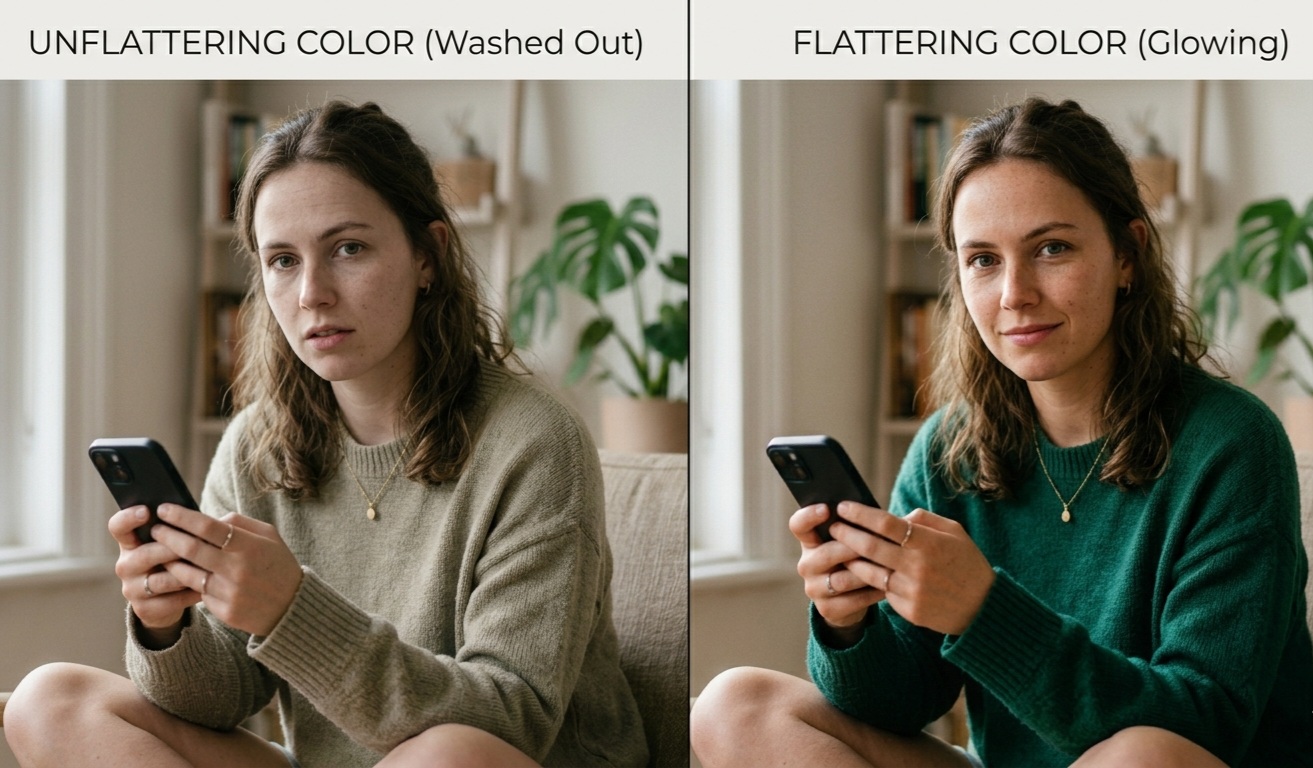
When neutral undertones are styled with extreme temperatures or neon saturation, the impression can shift slightly toward imbalance. The complexion may appear slightly overheated, overly sharp, or slightly washed out.
Because neutral undertone is naturally about equilibrium, harmony directly influences how steady and composed a person appears.
Can Neutral Undertone Break Rules?
Yes. Neutral undertones often have more flexibility than other undertones because they contain both warm and cool pigments.
If you wear a very warm color, balancing it with cooler makeup or silver jewelry can restore harmony. If you wear a very cool icy dress, adding warmer jewelry or lipstick can balance the look.
If you experiment with neon shades, placing them away from the face while keeping facial colors balanced can maintain visual harmony.
Neutral undertone allows experimentation, but balance should always return somewhere within the outfit.
Real-Life Styling Experience, Corrections, and Practical Insight
Neutral undertone is often called “balanced,” but in real life, it rarely feels that simple.
Over the years, I have worked with many women who technically had neutral undertones. On paper, they could wear both warm and cool tones. In theory, they had more flexibility than anyone else.
But in reality, they were often the most confused.
Because when everything seems like it should work, it becomes harder to understand why something doesn’t.
They would try different colors, different styles, different combinations. Some days, everything looked right. On other days, the same effort would not give the same result.
That inconsistency is what defines most neutral undertone experiences.
What I Notice First
When I work with a neutral undertone, I do not look for warmth or coolness immediately. I look for imbalance.
There was a woman who came to me feeling completely unsure about her style. She had tried everything. Warm tones, cool tones, minimal palettes, bold colors. Nothing felt consistently right.
Some outfits made her look fresh and balanced. Others made her look slightly tired or undefined, even though the pieces themselves were beautiful.
She told me something very honestly. She said, “I don’t know what suits me. Some days I feel like I look good, and other days I look like a different person.”
That is a very common neutral undertone experience.
Her issue was not lack of options. It was lack of direction.
We didn’t restrict her. We refined her choices.
Instead of mixing random warm and cool tones, we began creating controlled combinations. Soft rose instead of peach. Dusty blue instead of bright cobalt. Balanced neutrals instead of extremes.
The change was not dramatic. It was stabilising.
Her appearance became consistent. Her face looked the same across different outfits, clear, composed, and defined.
She no longer felt like she was guessing.
Where Neutral Undertone Becomes Confusing
The biggest challenge is freedom.
Because neutral undertones can wear both warm and cool tones, many women assume everything will work equally well.
But in reality, extremes often create imbalance.
I remember a client who wore a very cool-toned icy outfit for a formal setting. On another day, she wore a heavily warm-toned golden outfit.
Both were technically “suitable.”
But neither felt completely natural on her.
In the cool outfit, her face looked slightly pale and disconnected. In the warm outfit, her features looked slightly softened and less defined.
Neutral undertone does not mean extremes. It means balance.
When we shifted her toward balanced tones, soft berry, muted teal, neutral rose, warm-cool blends, everything changed.
Her face looked more stable, more consistent, more like itself.
The Everyday Struggle No One Talks About
Neutral undertone women often spend more time getting ready than they realise.
Trying one outfit. Then another. Then going back to the first. Not because nothing looks good, but because nothing feels completely right.
There is always a slight hesitation.
That hesitation comes from imbalance, not from lack of style.
Once balance is introduced, that hesitation reduces significantly.
Shopping Without Clear Direction
Shopping can feel confusing when you can technically wear everything.
A warm beige looks fine. A cool grey looks fine. A bright color looks interesting. A muted tone feels safe.
But over time, this creates a wardrobe that lacks harmony.
Everything works individually, but nothing works together.
This is one of the most overlooked issues with neutral undertones.
The solution is not restriction. It is consistency in balance.
Choosing tones that sit between extremes creates a wardrobe that feels connected.
The Role of Subtle Balance
Neutral undertones respond best to moderation.
Not too warm. Not too cool. Not too bright. Not too muted.
This does not mean everything should be boring. It means everything should be intentional.
I have seen women transform their entire appearance by simply shifting from extreme tones to balanced ones.
Soft berry instead of bright fuchsia. Muted teal instead of sharp turquoise. Balanced ivory instead of stark white or deep cream.
These small changes create a face that looks calm, clear, and composed.
Accessories and Their Impact
Neutral undertones have flexibility with metals, but even here, balance matters.
Very bright silver can feel too sharp. Very yellow gold can feel too warm.
Blended metals, soft gold, champagne tones, or even mixing metals often creates the most natural effect.
The goal is harmony, not dominance.
Common Mistakes That Go Unnoticed
Switching between extreme warm and extreme cool tones without consistency.
Building a wardrobe with no central palette.
Choosing colors based on trend rather than balance.
Ignoring how colors look together across outfits.
These do not feel like mistakes, but they create inconsistency over time.
What Actually Works
The most effective approach for neutral undertone is controlled balance.
Choosing tones that sit between warm and cool. Building a palette that feels connected. Creating combinations that repeat harmony instead of breaking it.
When balance is achieved, everything feels easier.
Your face looks consistent. Your outfits feel cohesive. Your decisions become quicker.
The Emotional Shift
This is where the real change happens.
Neutral undertone women often feel unsure without knowing why. When balance is found, that uncertainty disappears.
You stop second-guessing. You stop overthinking. You start trusting what you see.
And that quiet confidence changes everything.
Simple Do and Do Not Guidance
Do: Choose balanced tones that sit between warm and cool.
Do: Build a consistent palette instead of mixing extremes.
Do: Pay attention to how colors work together, not just individually.
Do: Use soft contrast instead of very sharp contrast.
Do Not: Switch between extreme warm and cool without intention.
Do Not: Assume everything will work equally well.
Do Not: Ignore overall harmony.
Frequently Asked Questions
1. Why do some outfits work beautifully one day and feel slightly off the next?
Because balance quietly shifts. As someone with a neutral undertone, even a small change in your accessories like a slightly warmer scarf or a cooler-toned pair of earrings can alter how your skin reflects light. The days it works are the days everything is in quiet agreement, even if you did not plan it consciously.
2. Can I really wear both warm and cool tones?
You can, and that is something I have seen work beautifully on many women. But it needs intention. I once styled a client who wore a warm tan bag with cool silver jewellery, and something felt off. When we introduced a soft neutral scarf that carried both tones, everything suddenly made sense. It is about connection, not restriction.
3. What is my biggest strength in styling?
You have flexibility, but it is a quiet kind of flexibility. It is not about wearing everything, it is about blending things in a way that feels effortless. When done right, your style looks richer and more layered than someone strictly warm or cool.
4. Why do I feel inconsistent even when I have good clothes?
Because your pieces may not be speaking to each other. I have seen wardrobes filled with beautiful items, but when worn together, they felt disconnected. The issue was never quality, it was alignment.
5. What is the safest way to start fixing this?
Come back to calm, balanced neutrals. Shades that do not lean too warm or too cool naturally bring your look back together. They give you a base you can trust.
6. Can I wear bold colors?
Yes, but let them breathe. I always suggest softening the rest of the outfit when a bold color is present. It allows the color to stand out without overpowering you.
7. Why does pure white sometimes feel too sharp on me?
Because it can lean slightly cool and feel disconnected from your balance. A softer white often sits more comfortably against your skin.
8. Why does cream sometimes feel heavy?
Cream carries warmth, and if the rest of your outfit does not support it, it can feel slightly overwhelming rather than soft.
9. What about black?
Black works, but I have noticed it looks best when softened with something else. A gentle accessory, a softer fabric, or even a mixed metal can make it feel more natural on you.
10. Do accessories really make that much difference?
More than most people realise. I have seen women change only their earrings or switch their handbag, and suddenly their entire face looked brighter. Accessories are not small details, they are finishing decisions.
11. Can I mix gold and silver?
Yes, and it often looks beautiful on you when done with care. The key is not to let one overpower the other. When they sit together calmly, the result feels effortless.
12. Why does my wardrobe feel disconnected?
Because it may not have a common thread. I always tell my clients, your wardrobe should feel like a conversation, not separate voices speaking over each other.
13. Should I avoid extremes?
Not entirely, but I would guide you to handle them gently. When something is too warm or too cool, balance it instead of letting it dominate.
14. How do I shop better for things like bags, shoes, and belts?
Think beyond the item itself. Imagine it with at least three outfits you already own. If it connects easily, it belongs with you.
15. Why do I overthink my outfits so much?
Because you are sensitive to imbalance. That feeling of something being off is not confusion, it is awareness. Once you understand it, it becomes your strength.
16. Do textures matter for me?
They do. I have seen that softer, blended textures sit more naturally on neutral undertones. Extremely shiny or extremely flat surfaces can feel slightly disconnected.
17. Can makeup fix imbalance?
Only to a point. True harmony comes from your overall choices. Makeup should support, not correct everything.
18. What is the biggest mistake I should avoid?
Assuming everything will work. Your balance is your strength, but it still needs direction.
19. What should I focus on the most?
Consistency. Not perfection, just a quiet sense that everything belongs together.
20. Why do I feel more confident in certain outfits?
Because nothing is fighting for attention. When everything is aligned, your presence comes forward naturally.
21. How do scarves and hats affect me?
They sit very close to your face. I have seen a single scarf completely change how a woman looked. It is not just an accessory, it is a reflection onto your skin.
22. What about footwear and bags?
They ground your outfit. If they feel disconnected, the entire look loses its flow, even if everything else is correct.
23. Can I wear matching sets?
Yes, and they often work beautifully because they reduce confusion. They create a sense of calm in your overall look.
24. Why do some days feel effortless?
Because everything you chose that day aligned without resistance. Those are the days when styling becomes second nature.
25. What is the easiest improvement I can make?
Start with what is closest to your face. Small changes there create the biggest visible difference.
26. How do I stop my outfits from feeling confused?
Decide gently what direction you are taking before you dress. Even a subtle decision creates clarity.
27. Can I experiment with trends?
Of course. Just bring them back to your balance. Let them adapt to you.
28. Why do coordinated outfits suit me so well?
Because they reduce visual noise. They allow your natural balance to come through.
29. What is the safest everyday approach?
Stay within balanced tones and keep your accessories thoughtful. That alone creates a polished look.
30. What is the most important rule for me?
Do not chase extremes. Stay where you naturally belong, in balance.
31. How do I know I got it right?
You stop adjusting yourself. You feel settled, comfortable, and quietly confident.
32. What truly changes everything?
When your choices start to feel natural instead of forced. When your jewellery, shoes, scarves, and every small detail feels like it belongs to you, not just something you are wearing.
Core Rule Summary
Choose moderation over extremes. Prefer muted tones over neon shades. Balance warm and cool elements across the outfit. Use gold and silver strategically depending on the temperature of the clothing.
When neutral undertone balance is respected, the skin appears smooth, harmonious, polished, and naturally refined.
More Guides You Might need
Why You Look Better in Some Lighting and Worse in Others
Why Do I Look Washed Out in Photos and How to Fix It

Why Do Bad People Seem to Win in Life?

Why Don’t I Feel Happy About My Pregnancy All the Time?

Why Does My Mind Feel So Heavy During My Period?
How to Dress Better Without Buying New Clothes

Why do I look bad in photos ? ( and what's the solution )
Is My Phone Making Me Dumb Every Day?
© 2026 Femmemalist™. All rights reserved.