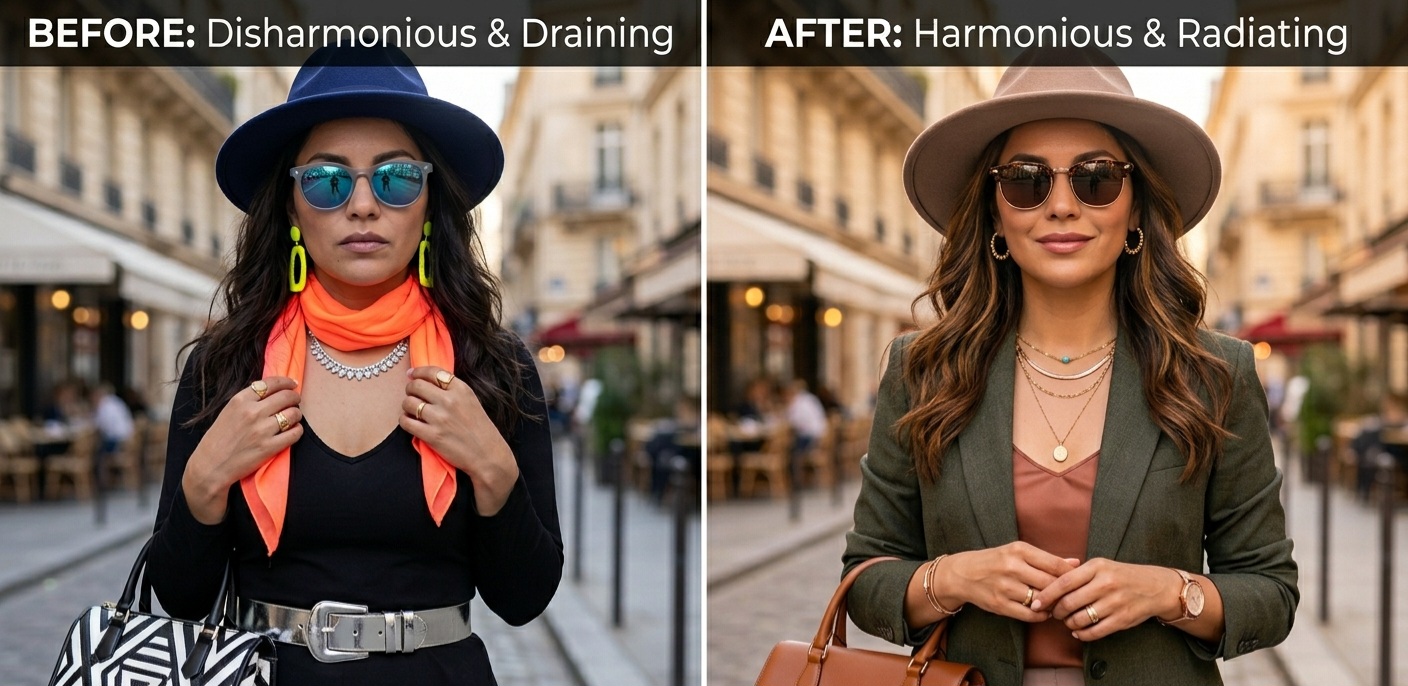
OLIVE UNDERTONE: ACCESSORIES, JEWELRY & COMPLETE STYLING GLOW-UP GUIDE FOR WOMEN
How to Style an Olive Undertone Through Details That Quietly Change Everything
Most women don’t realise that the difference between looking well-dressed and looking completely put together rarely comes from clothing alone.
It comes from the details, especially for women with an olive undertone, where accessories, jewelry, hair tone, and smaller styling choices can completely influence how everything comes together.
Many women search for answers like what jewelry suits an olive undertone, what color accessories look best, or why some outfits feel complete one day and slightly off the next. The answer is often not the outfit itself, but how well the details align with your undertone.
I have seen wardrobes that were thoughtfully built, beautiful pieces, good silhouettes, the right effort, yet something still felt slightly unfinished. Not wrong, just not fully aligned.
When your accessories and details do not match your olive undertone, even the right outfit can feel incomplete.
And almost every time, the shift happened when we looked beyond clothing.
Hair tone, the metal of a watch, the color of a bag, the finish of a shoe, the softness of a scarf, even something as small as a hair accessory, these are not separate elements. They sit close to your face and hands, reflect light, and directly influence how your skin tone and features are perceived.
I remember working with a woman who felt her style was inconsistent. Some days she looked exactly how she wanted. Other days, with the same level of effort, something felt slightly off. Her clothing was not the issue.
When we refined her accessories for her olive undertone, adjusting jewelry metals, choosing earthy muted tones, and aligning her footwear and smaller details, everything changed. Not dramatically, but unmistakably.
Small details that match your undertone create richness, balance, and a naturally polished look.
Her appearance became consistent. Her choices became easier. She no longer questioned whether something worked. She could see it.
This is the role of undertone-based styling. It does not transform who you are. It brings everything into harmony with what already exists.
This section focuses on accessories for olive undertones, including jewelry, hair, scarves, belts, watches, and other small details that influence your overall appearance more than you might expect.
If you prefer not to think through each decision every time, I have also organised these into a simple reference so you can choose accessories that suit an olive undertone without second guessing.
When your details align with your undertone, your entire presence feels complete without extra effort.
Take your time here. These are often the changes that feel the smallest, but create the most lasting difference.
1. Metals
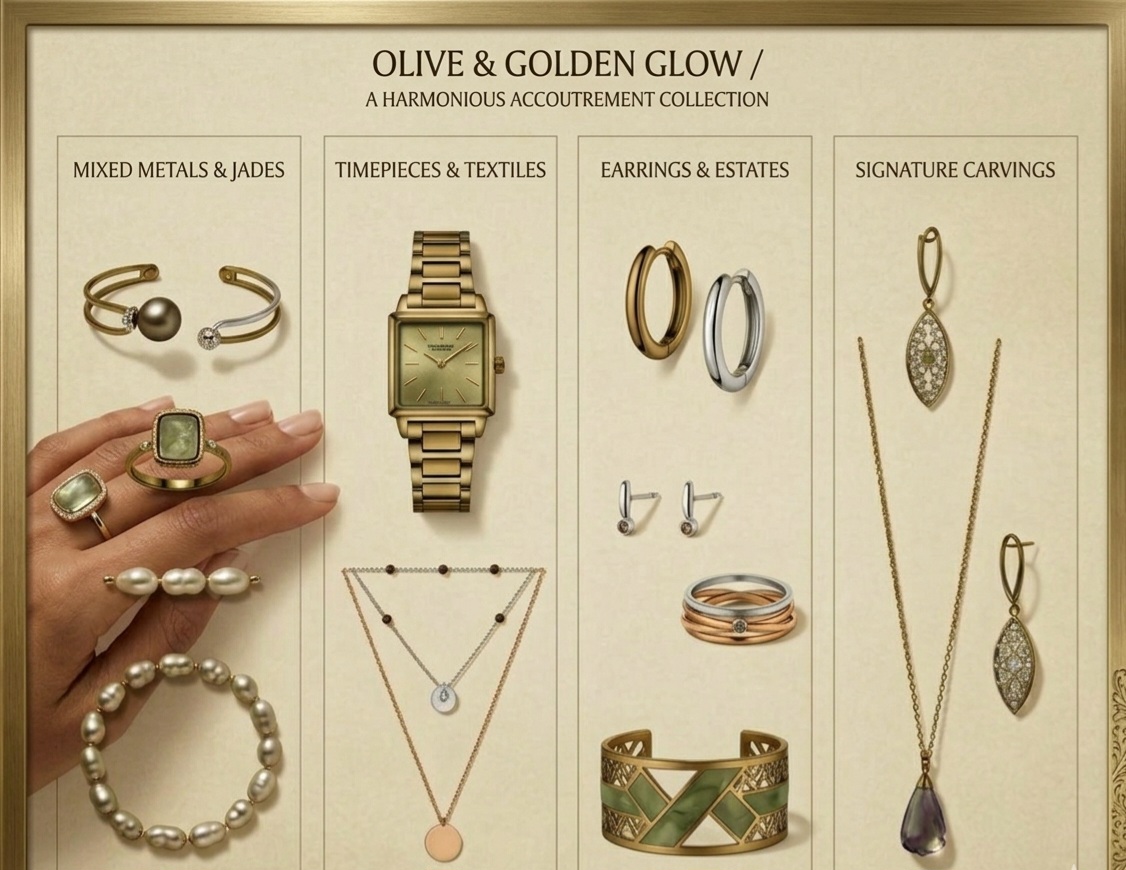
Olive undertones glow beautifully in metals that carry warmth without excessive brightness. Antique gold, champagne gold, muted brass, bronze, brushed gold, aged metallic finishes, and soft mixed metals enhance the natural earthy richness present within olive skin. These metals create depth and dimension while allowing the skin to appear balanced, healthy, and naturally radiant. Olive undertones often sit between warm and neutral, which means overly icy silver can sometimes feel disconnected unless balanced carefully with warmer elements. Soft golds and muted metallics blend seamlessly into olive skin rather than overpowering it. The more refined and slightly muted the metal appears, the more harmonious and luxurious your overall styling feels.
2. Jewelry Stones
Olive undertones pair beautifully with gemstones that carry earthy richness, muted saturation, or deep jewel depth. Emerald, smoky quartz, amber, garnet, tiger eye, olive jade, moss agate, muted citrine, deep teal stones, earthy topaz, and warm-toned crystals enhance the natural complexity of olive skin. These stones create warmth and balance without creating heaviness. Deep jewel colors with softened undertones tend to elevate olive complexions beautifully because they mirror the richness already present within the skin. Extremely icy stones or overly blue-toned crystals can sometimes feel harsh unless styled intentionally. Earthy luminosity almost always creates a more cohesive and naturally elegant result.
3. Frames (Spectacles & Sunglasses)
Eyewear for olive undertones should enhance the depth and balance naturally present in the face. Frames in tortoiseshell, espresso brown, muted olive, deep forest green, bronze, soft gold, warm charcoal, muted burgundy, dark amber, and smoky neutrals sharpen features while maintaining warmth and richness. Olive undertones often look especially refined in softly warm metals rather than extremely cool silver finishes. Transparent olive frames and earthy gradients also blend beautifully with olive skin. Avoid overly icy white frames or bright chrome metals near the face, as they can sometimes create unnecessary contrast and make the complexion appear flatter.
4. Watches
Olive undertones look especially sophisticated in watches with brushed gold, antique gold, muted bronze, champagne metallics, or mixed-metal casings. Straps in olive green, espresso brown, dark taupe, deep burgundy, muted tan, warm charcoal, or dark forest tones create visual harmony and support the natural richness of olive skin. Dials in cream, warm ivory, muted gold, olive gray, deep green, or smoky bronze enhance cohesion beautifully. Extremely icy silver watches can sometimes feel disconnected unless paired with warmer styling elements nearby. Muted warmth tends to create the most balanced and refined effect.
5. Bags
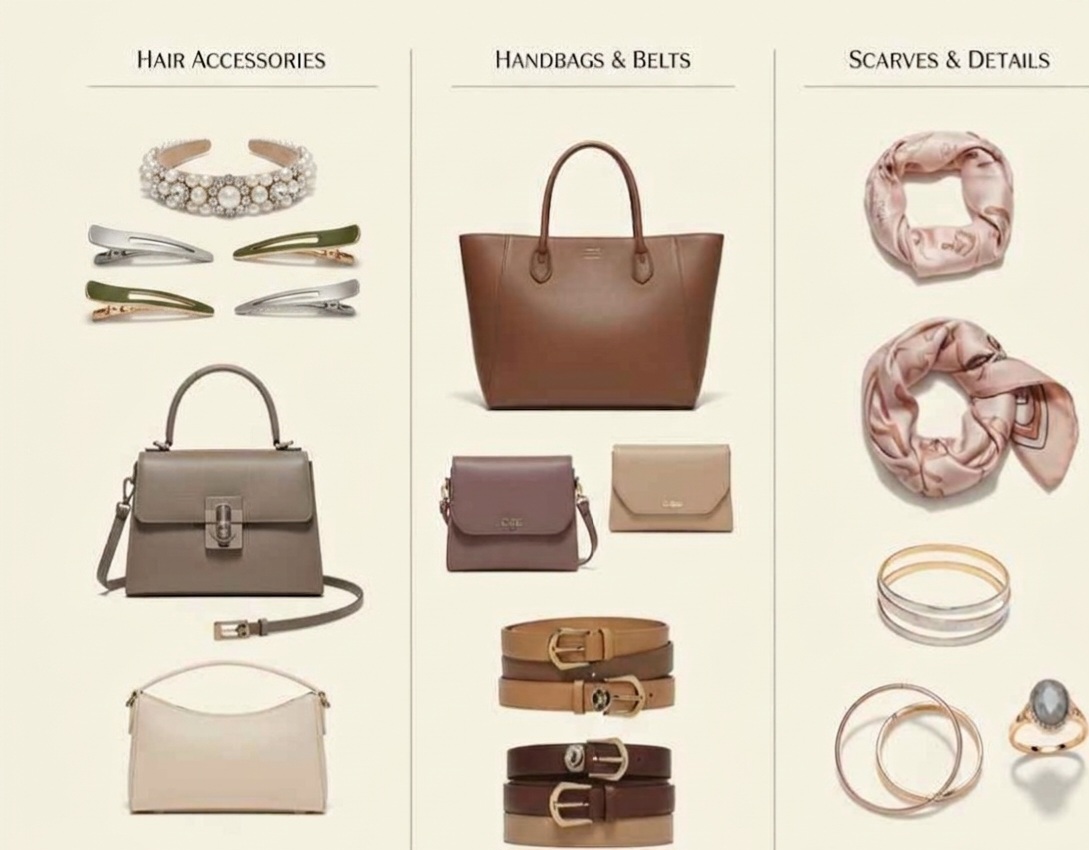
Bags for olive undertones look most harmonious in rich earthy neutrals and muted jewel-inspired shades. Olive green, espresso, chocolate brown, muted camel, warm taupe, deep burgundy, dark teal, forest green, soft bronze, earthy plum, and rich tan tones blend naturally with olive skin and create a grounded, luxurious appearance. Textures like soft suede, croc-embossed earthy leather, matte finishes, antique metallic details, and brushed hardware enhance the richness of olive undertones beautifully. Extremely icy pastel bags or very cool gray tones can sometimes interrupt the natural warmth and depth olive undertones carry.
6. Belts
Belts for olive undertones work best in rich, grounded neutrals that support the warmth and depth already present within the skin. Espresso brown, olive leather, dark tan, muted camel, deep taupe, chocolate brown, and soft bronze shades create structure without harshness. Buckles in antique gold, brushed brass, bronze, or muted metallic finishes integrate seamlessly into olive-toned styling. Extremely bright silver or icy chrome buckles can sometimes feel too sharp against olive warmth unless balanced intentionally. Olive undertones almost always look more expensive and cohesive when the accessories carry softness rather than excessive contrast.
7. Scarves
Scarves are one of the most powerful accessories for olive undertones because they sit directly near the face and influence how the complexion reflects light. Olive undertones flourish in muted olive green, sage, earthy plum, dusty terracotta, warm berry, smoky teal, moss green, muted rust, chocolate brown, forest green, and softened burgundy. These shades bring warmth and richness to the face without overwhelming it. Fabrics like silk, pashmina, chiffon, modal, and soft cotton blends absorb earthy dyes beautifully and create softness around olive complexions. Extremely icy tones or harsh cool pastels can sometimes flatten olive skin and reduce natural dimension.
8. Hats
Olive undertones pair beautifully with hats in deep brown, muted green, olive felt, espresso wool, earthy taupe, muted camel, forest green, dark olive, and warm charcoal. These shades frame the face softly while preserving the richness and balance naturally present in olive skin. Materials like felt, suede, wool, denim, and structured earthy fabrics enhance olive undertones especially well because they create depth without harshness. Antique metallic details and muted embellishments tend to blend more naturally than bright silver hardware or icy accents.
9. Hair Accessories
Hair accessories that carry warmth and muted richness enhance olive undertones beautifully. Bronze clips, tortoiseshell details, antique gold barrettes, olive satin ribbons, earthy floral accessories, espresso bands, muted metallic pins, and deep green accents blend naturally into olive-toned styling. These pieces create softness and harmony near the face while maintaining the natural depth of olive skin. Extremely bright silver clips, icy embellishments, or cool-toned plastic finishes can sometimes feel disconnected unless intentionally styled for contrast.
10. Footwear
Footwear for olive undertones looks most harmonious in grounded earthy shades that support the richness already present within the complexion. Espresso brown, olive green, muted camel, dark taupe, chocolate brown, bronze metallics, deep burgundy, forest green, warm charcoal, and soft cream create cohesion and visual balance. Suede textures, matte leather, antique metallic finishes, and softly polished materials enhance olive undertones beautifully because they create warmth without excessive brightness. Extremely icy white footwear or cool gray-heavy tones can sometimes interrupt the natural earthiness olive undertones carry.
11. Nail Polish
Olive undertones are enhanced beautifully by nail colors that carry earthy richness or muted warmth. Olive green, deep burgundy, espresso, muted chocolate, smoky plum, terracotta-brown, deep teal, muted berry, forest green, bronze metallics, warm taupe, dusty rose, and earthy nude tones all complement olive skin elegantly. Chrome bronze finishes and antique metallic effects add sophistication without overpowering the complexion. Extremely icy pastels or harsh blue-based shades can sometimes feel disconnected against olive warmth unless styled intentionally.
12. Perfume Bottles (Aesthetic Match)
Perfume bottles in amber glass, smoky bronze, muted gold, olive gradients, earthy brown, deep forest green, dark burgundy, champagne metallics, or warm neutral tones align beautifully with olive undertones. These bottles reflect the earthy richness and natural depth present within olive skin and create harmony when displayed or carried. Frosted ivory and antique metallic details often feel especially luxurious against olive aesthetics because they add warmth without excessive brightness.
13. Rings
Olive undertones look especially refined in rings crafted from antique gold, champagne gold, brushed brass, bronze, mixed metals, or softly muted metallic finishes. Stones such as emerald, smoky quartz, tiger eye, garnet, olive jade, moss agate, amber, and earthy topaz enhance the richness naturally present within olive skin and make the hands appear elegant and balanced. Rounded cuts, vintage-inspired settings, earthy clusters, and softly textured finishes flatter olive undertones beautifully because they create warmth without looking overly sharp or cold. Extremely icy silver rings or highly reflective chrome finishes can sometimes feel disconnected unless balanced intentionally.
14. Bracelets
Bracelets in antique gold, muted bronze, brushed brass, earthy beads, olive-toned stones, smoky crystals, or mixed-metal chains enhance olive undertones with softness and sophistication. Layered earthy bracelets, vintage metallic cuffs, muted gold bangles, and warm-toned tennis bracelets blend naturally into olive-toned styling because they echo the richness already present within the skin. Extremely bright silver-heavy bracelets or harsh chrome finishes can sometimes overpower the subtle depth olive undertones carry.
15. Purses & Clutches
Clutches in espresso brown, olive green, muted bronze, earthy plum, smoky teal, warm taupe, deep burgundy, rich chocolate, antique metallics, or dark forest tones naturally harmonize with olive undertones. Materials like suede, croc-embossed earthy leather, brushed metallic finishes, matte textures, and softly reflective fabrics enhance olive skin beautifully because they create richness without harsh contrast. Extremely icy silver clutches or cool white-heavy designs can sometimes interrupt the grounded elegance olive undertones naturally carry.
16. Phone Cases
Phone cases in olive green, espresso brown, muted taupe, earthy marble, bronze metallics, smoky beige, deep burgundy, muted teal, forest green, or matte chocolate tones complement olive undertones beautifully and maintain cohesion with your overall aesthetic. Earthy matte finishes, vintage metallic details, tortoiseshell patterns, and muted gradients blend especially well with olive skin because they feel balanced and naturally luxurious. Extremely icy pastel cases or cool chrome-heavy designs can sometimes create unnecessary contrast.
17. Patterns & Prints
Olive undertones are flattered by prints that carry earthy richness, softened depth, or muted jewel-inspired tones. Olive florals, forest-inspired patterns, earthy abstract prints, muted animal prints, smoky watercolor effects, warm geometric patterns, mossy greens, dusty terracotta details, rich teal motifs, and muted burgundy designs all enhance olive skin beautifully. Extremely icy patterns, neon cool tones, or overly stark contrasts can sometimes overpower the natural balance olive undertones carry. The more grounded and blended the palette feels, the more cohesive the overall styling appears.
18. Textures
Textures that carry warmth, softness, and depth work especially well for olive undertones. Suede, satin, silk, matte leather, softly polished metallics, brushed fabrics, warm velvet, earthy knits, and rich woven materials enhance olive skin beautifully because they reflect warmth gently rather than sharply. Olive undertones often look most expensive in textures that feel grounded and luxurious rather than extremely glossy or icy. Overly reflective chrome fabrics or very cold metallic textures can sometimes feel disconnected against olive warmth.
19. Seasonal Dressing
Olive undertones shine beautifully across multiple seasonal palettes because of their natural balance between warmth and depth. Autumn offers olive green, earthy brown, muted rust, espresso, forest green, smoky teal, warm burgundy, and rich camel, all of which align naturally with olive skin. Winter suits deeper jewel-inspired shades like emerald, deep teal, dark plum, chocolate brown, and muted metallics. Spring works beautifully with sage green, muted peach, dusty rose, and earthy neutrals, while Summer complements olive undertones through smoky taupes, soft olive, muted berry, and earthy cool-toned blends. Seasonal dressing becomes easier when warmth stays muted rather than overly bright.
Real-Life Styling Experience, Corrections, and What Truly Changes Everything
Most women are not doing anything wrong. They are simply missing one piece of understanding that no one ever explained to them clearly.
I have spent years observing something very consistent. Women put in effort. They choose carefully. They try to look put together. Yet there is often a quiet hesitation in how they feel about their appearance.
Not dissatisfaction exactly. Just a subtle feeling that something is not fully coming together.
That feeling is real. And it almost always has a reason.
I remember working with a woman who had built a wardrobe over years. Everything she owned was elegant. Bright silver jewelry, icy gray bags, cool-toned accessories, sharp monochrome combinations. If you looked at each piece individually, it was beautiful.
But when she stood in natural light, something shifted. Her face looked slightly flatter and less alive by the end of the day. Not dramatically, just enough for her to feel it.
She told me quietly, “I feel like something about my styling never fully settles.”
We didn’t change her clothes first. We changed her details.
We replaced her bright silver watch with a muted bronze one. Changed her cool gray bag to deep olive. Switched her icy scarf to a smoky earthy green. Even her hair accessories were adjusted to warmer muted finishes.
These were small changes. Almost invisible to someone else.
But when she saw herself again, she paused.
“I finally look balanced,” she said.
That moment is something I have seen again and again.
Correct styling does not make you look different. It removes what was interfering with you.
Another woman came to me after a wedding function. She had worn a very cool-toned silver outfit with icy accessories. It was expensive, beautifully tailored, and very much in trend.
But in every photograph, her skin looked slightly gray and disconnected.
She thought it was the lighting. It wasn’t.
For her next event, we kept everything the same except the temperature. A deep olive-toned outfit, muted gold jewelry, a warmer earthy clutch.
The difference was immediate. Her skin looked richer. Her features appeared softer yet more defined. She needed less correction, less effort, less adjustment.
She told me something very honest.
“This feels like me, but calmer.”
That is the goal.
Not transformation. Alignment.
I have seen this in everyday life too. College students choosing bright icy accessories thinking they are neutral. Women wearing cool-toned scarves because they feel elegant, without realising how strongly they affect the face. Even something as small as a metallic hair clip in the wrong finish can change how olive skin reflects light.
These are not mistakes made out of carelessness. They happen because no one explains how powerful these small elements are.
Accessories sit where attention naturally goes. That is why they matter more than we think.
When we correct them, the shift is not loud. It is quiet, but deeply visible. The face looks richer. The skin looks healthier. The overall presence feels more grounded and composed.
And most importantly, the effort required reduces.
You stop adjusting. You stop questioning. You simply know.
What to Do and What to Avoid
Choose metals that support your natural richness. Antique gold, bronze, muted brass, and warm metallic finishes usually enhance olive undertones more naturally than extremely icy metals.
Avoid assuming that all earthy tones automatically work. Some earthy shades can become too muddy or overly warm against olive skin if they lack balance.
Keep brightness controlled and intentional. Olive undertones usually look most harmonious in softened depth rather than extremely sharp contrast.
Pay attention to reflection points. Earrings, scarves, eyewear, and hair accessories influence the face more strongly than most people realise.
Avoid trying to fix imbalance only through makeup. Styling harmony matters just as much as cosmetics.
Build a grounded color palette. Repeating earthy richness and muted jewel tones creates polish and consistency.
Notice how your skin reacts. Olive undertones often reveal imbalance through dullness or flatness rather than obvious redness.
Practical Styling That Works in Real Life
In daily wear, the smallest swaps create the biggest difference. An olive or espresso bag instead of icy gray. Warm ivory instead of stark white. A muted metallic accessory instead of bright chrome.
In college environments, where lighting changes constantly, earthy accessories help olive skin maintain warmth and balance throughout the day.
In office settings, replacing harsh cool accessories with softer grounded tones creates a calmer and more composed presence without changing your clothing style.
For functions, always prioritise what sits closest to your face. Jewelry, blouse tone, scarves, and hair accessories determine how your skin will appear in photographs.
For travel, simplify. Carry a small set of reliable earthy accessories that work with everything. This removes overthinking and keeps your look cohesive.
For everyday decisions, trust one simple rule.
If your skin looks richer and healthier, it works. If it looks flat or slightly gray, something is off.
Frequently Asked Questions
1. Why do I feel like something is off even when I am well dressed?
Because alignment matters more than effort. You can wear something expensive, well-fitted, and perfectly styled, but if the undertone or temperature of your accessories does not work with your olive skin, the entire look can feel slightly disconnected. It is usually not one big mistake, but many small elements pulling in different directions.
2. How do I instantly know if something suits me?
Look at your face in natural light after everything is styled together. If your skin looks richer, healthier, and more balanced, the combination is working. If your complexion suddenly looks flat, dull, or slightly gray, one of the tones may be disrupting your natural harmony.
3. Are all earthy tones safe for olive undertones?
No. Olive undertones usually look best in earthy shades that still carry clarity and depth. Some muddy browns or overly yellow tones can make olive skin appear heavy instead of balanced.
4. Can I wear silver jewelry?
Yes, but balance matters. Softer silver, brushed metallics, or mixed metals usually work more naturally than extremely icy chrome finishes. Olive undertones often benefit from warmth being present somewhere in the overall styling.
5. Why do muted golds look more natural on me?
Because they reflect the warmth already present within olive skin rather than competing with it. When metals blend into your natural coloring, the entire look feels more cohesive and effortless.
6. Do accessories really matter that much?
Yes, especially the pieces closest to your face. Jewelry, scarves, eyewear, and hair accessories influence how your skin reflects light more than most clothing pieces do.
7. Why do photos sometimes make me look gray or dull?
Because cameras exaggerate imbalance. Extremely cool tones or harsh contrasts can flatten olive skin in photographs even if the outfit looked acceptable in person.
8. Is black always a safe choice?
Black is generally reliable because it adds structure and depth without introducing excessive warmth or brightness. Olive undertones usually handle black very well, especially when balanced with earthy accessories.
9. Why do icy tones sometimes feel harsh on me?
Because olive skin naturally carries warmth and muted depth. Extremely icy colors can sometimes overpower that balance and make the complexion appear flatter.
10. Can I still wear cool-toned accessories?
Yes, but they usually work best when softened or balanced with warmer elements somewhere else in the look.
11. Can makeup fix wrong styling choices?
Only to a certain extent. Makeup can help correct small imbalances, but if your accessories and clothing tones constantly work against your undertone, the disconnect will still show.
12. Why do some outfits make me look tired even if they are stylish?
Because styling is not just about fashion. It is about harmony. If the tones clash with your undertone, your skin can appear flatter or less alive even when the outfit itself is beautiful.
13. How do I create a consistent style?
Build around earthy richness and muted balance. When your wardrobe follows a connected palette, styling becomes easier and your overall appearance feels naturally cohesive.
14. Are muted colors better for olive undertones?
Usually yes. Olive undertones often look most expensive and balanced in softened depth rather than extremely bright or neon tones.
15. Why do I look better in certain combinations?
Because every element is supporting your undertone instead of fighting it. The harmony between your shoes, bag, jewelry, clothing, and accessories creates the final effect.
16. Do hair accessories matter?
Yes. Even small metallic clips or bands affect how your face reflects light because they sit very close to your skin.
17. Why do scarves affect my appearance so much?
Scarves sit directly near the face, so their undertone reflects immediately onto the complexion. This makes them one of the strongest styling tools you can use.
18. Can I mix metals?
Yes, and olive undertones often carry mixed metals beautifully when one tone remains dominant and the overall styling still feels intentional.
19. Why do earthy colors feel effortless on me?
Because they echo the natural depth already present within olive skin. The styling feels connected rather than separate.
20. How do I shop better?
Think about how a piece will work with your overall palette, not just whether the individual item looks beautiful by itself.
21. Why do I feel more confident in certain outfits?
Because visual harmony reduces internal discomfort. When your styling aligns with your undertone, everything feels calmer and more settled.
22. Do I need to replace everything?
No. Start with the accessories closest to your face such as jewelry, scarves, bags, and eyewear. Small adjustments create the biggest visible difference.
23. Why does lighting affect olive undertones so strongly?
Because olive skin reacts differently to warm and cool reflection. Lighting changes can either enhance richness or exaggerate dullness depending on the tones surrounding your face.
24. Can I wear neutral outfits daily?
Yes, especially when the neutrals carry earthy warmth or muted softness rather than harsh coolness.
25. Why does olive green work so naturally on me?
Because it reflects the balance already present within olive skin. It feels connected instead of competing with your complexion.
26. How do I stop overthinking outfits?
By building repeatable combinations. Once you understand which tones naturally support your undertone, getting dressed becomes much easier.
27. Do small details really matter?
They are often the deciding factor. Tiny details like hardware tone, shoe finish, or bag color can completely change how polished the overall styling feels.
28. Why do I look different in mirrors versus photos?
Photos capture the full interaction between all your styling elements, which makes undertone imbalance more visible than in everyday mirrors.
29. What is the safest styling direction for olive undertones?
Grounded neutrals, earthy richness, muted jewel tones, and softly warm metallics usually create the most reliable harmony.
30. What is the most important rule?
Everything should feel connected. Not identical, but balanced, intentional, and naturally aligned with your undertone.
31. What should I focus on first?
Start with accessories near your face such as jewelry, scarves, eyewear, and hair accessories, then build outward toward bags and shoes.
32. How do I know I finally got it right?
You stop constantly adjusting yourself. Your appearance feels calmer, richer, and naturally complete without extra effort.
More Guides You Might need
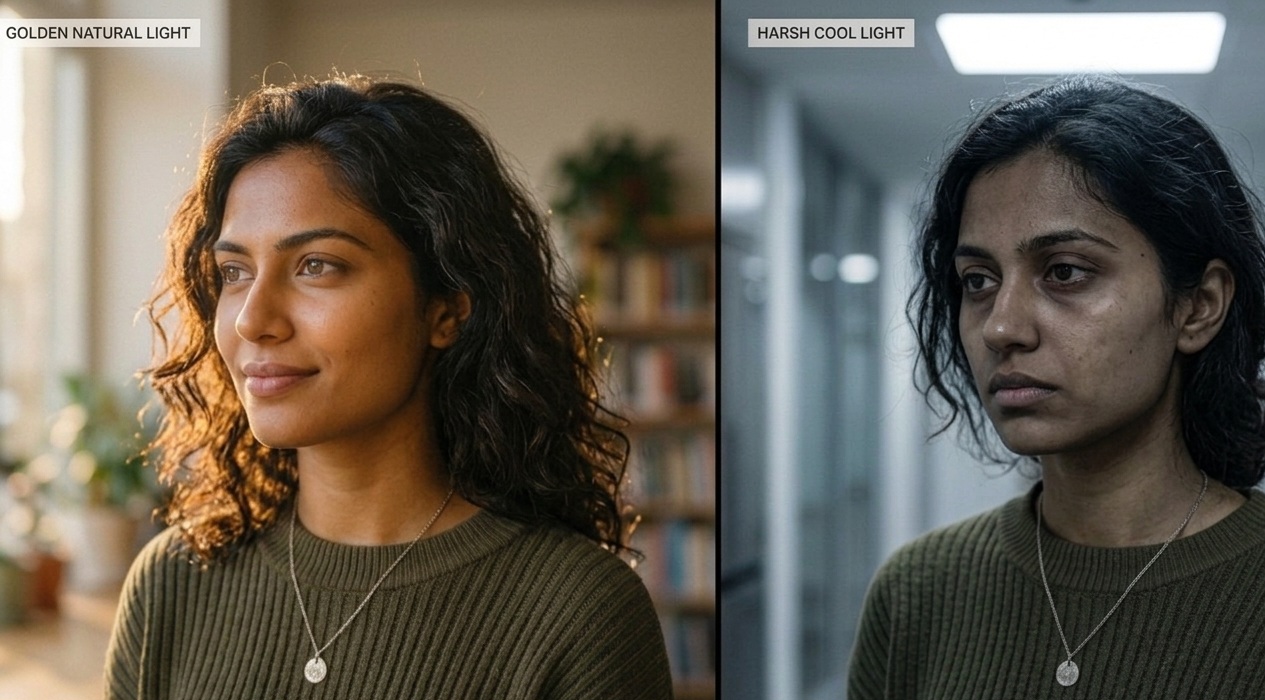
Why You Look Better in Some Lighting and Worse in Others
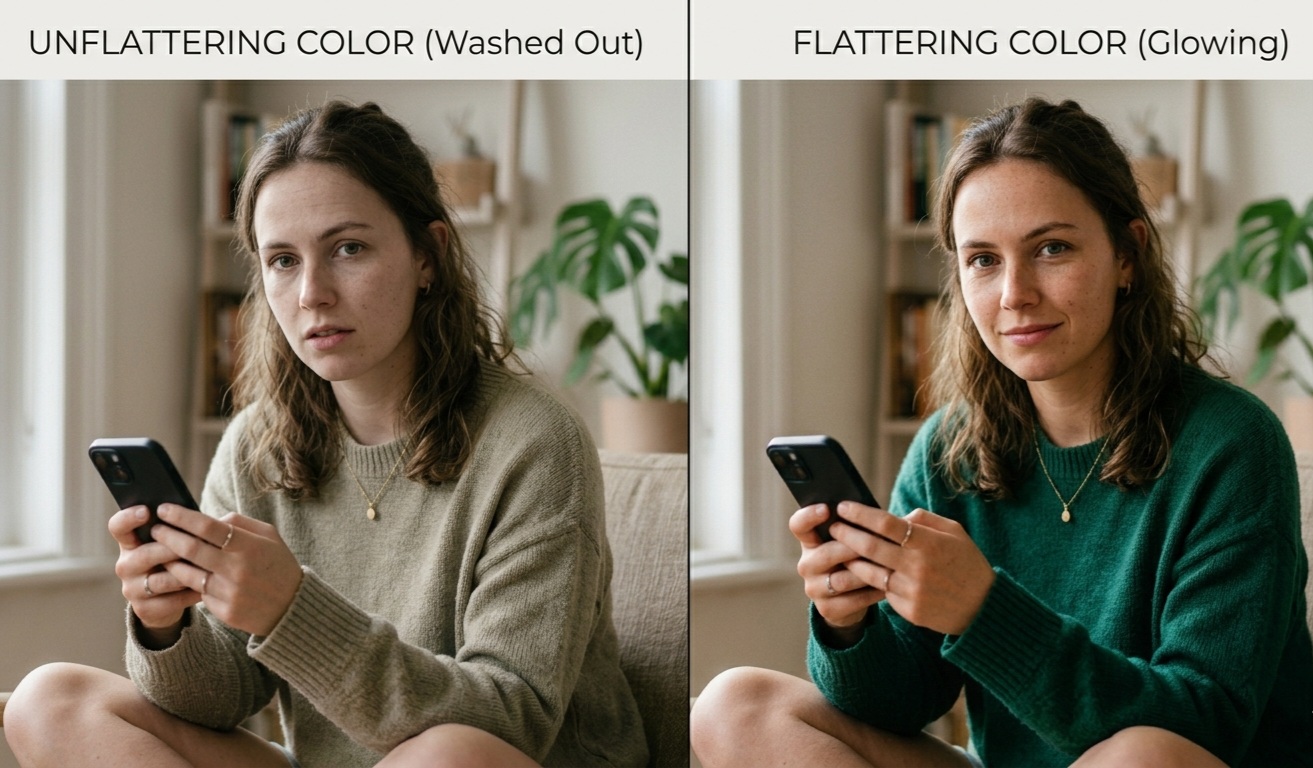
Why Do I Look Washed Out in Photos and How to Fix It
Why Do Bad People Seem to Win in Life?
Why Don’t I Feel Happy About My Pregnancy All the Time?
Why Does My Mind Feel So Heavy During My Period?
How to Dress Better Without Buying New Clothes
Is My Phone Making Me Dumb Every Day?

Why do I look bad in photos ? ( and what's the solution )
© 2026 Femmemalist™. All rights reserved.