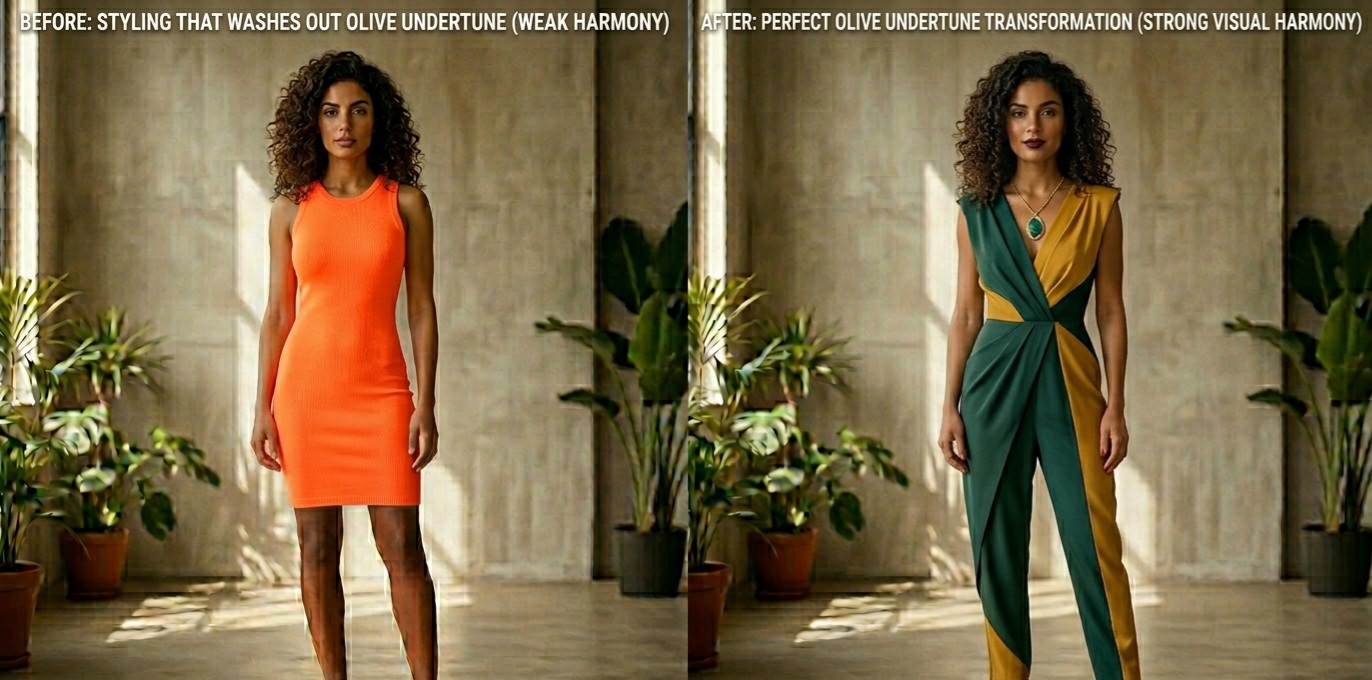
OLIVE UNDERTONE – THE COMPLETE ADVANCED MASTER GUIDE
Olive undertone is one of the most misunderstood undertones, and this is why many people feel like nothing truly matches them.
Many women search for answers like how to identify olive undertone, why foundation looks too orange or too pink, or what colors suit olive skin tone. The confusion does not come from lack of options. It comes from misidentification.
Olive undertone does not behave like typical warm or cool undertones. Standard color advice often does not apply correctly, which is why even well-chosen outfits can feel slightly off without a clear reason.
The issue is not your styling. It is that your undertone requires a different approach.
Over time, I have worked with individuals who struggled to find shades that blended naturally or outfits that felt cohesive. Once the undertone was correctly understood and styling was adjusted to match it, the difference was immediate. Skin appeared clearer, more even, and naturally refined without additional effort.
Olive undertone responds best to depth, muted tones, and controlled contrast rather than bright or overly saturated colors. Even small elements like jewelry tone, fabric richness, and color temperature can significantly affect how your skin appears.
Olive undertone styling is not about adding brightness. It is about choosing the right depth and balance.
The selections included here are based on patterns that consistently work for olive undertones across different lighting conditions and environments. If you prefer not to analyse every detail each time, you can explore curated options that are already aligned in tone, helping you choose pieces that enhance your natural balance without confusion.
What Olive Undertone Actually Is
Olive undertone means your skin carries a subtle green, grey-green, or muted yellow-green base beneath the surface. It is neither purely warm nor purely cool. It exists in a distinct middle range with a naturally muted appearance.
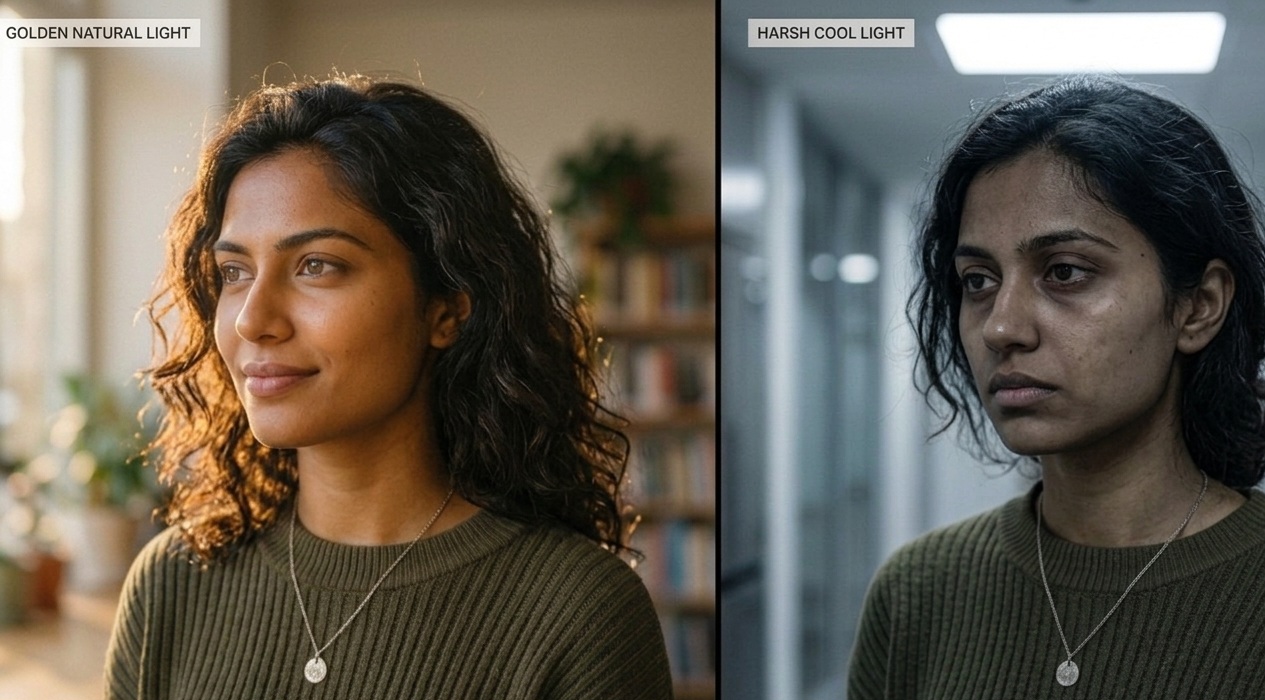
Olive skin can appear golden in sunlight but slightly grey or ashy in artificial lighting. This shifting effect is one of the key indicators of olive undertone.
Many people with olive undertones struggle with foundation matching. Pink-based foundations often look too red, while yellow-based ones can appear too orange. True olive or neutral-olive bases tend to blend more naturally.
Olive undertone skin often tans easily and rarely shows strong redness. However, when paired with overly bright or incorrect tones, it can appear dull, tired, or uneven.
Olive undertone does not need brightness. It needs depth, softness, and controlled richness.
Why Color Reacts Strongly on Olive Skin
Because olive skin already contains a green-grey base, bright or overly saturated colors can exaggerate dullness. Extremely icy tones can pull out the green in your skin while extremely yellow tones may flatten the complexion.
Olive undertone thrives in muted, earthy, and slightly deep colors. When harmony occurs, the skin looks smooth, refined, dimensional, and expensive. When harmony fails, the skin can appear lifeless or uneven.
Core Color Principle for Olive Undertone
Choose muted over bright. Choose deep over pastel. Choose balanced tones rather than extremes. Avoid neon colors near the face whenever possible.
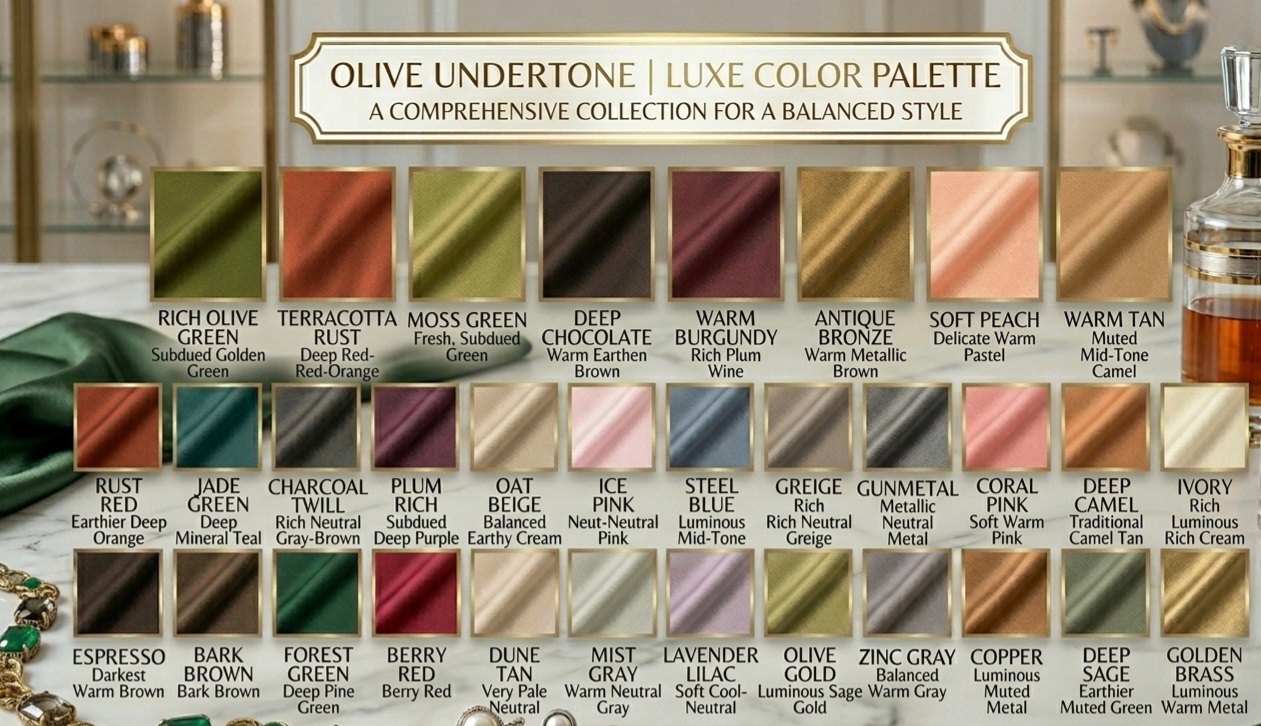
Olive Undertone Luxe Color Palette
These colors complement olive undertones by balancing green and golden pigments in the skin. Each shade enhances natural depth without making the complexion look dull. If a specific shade is unavailable, a close alternative can achieve a similar effect.
- Rich Olive Green – Subdued golden green that naturally harmonizes with olive skin. Alternative: Classic Olive Green.
- Terracotta Rust – Deep earthy red-orange that adds warmth to olive complexions. Alternative: Burnt Orange.
- Moss Green – Fresh muted green that blends beautifully with olive undertones. Alternative: Fern Green.
- Deep Chocolate – Warm earthen brown that acts as a rich neutral base. Alternative: Dark Cocoa Brown.
- Warm Burgundy – Deep wine shade that contrasts beautifully with olive skin. Alternative: Wine Red.
- Antique Bronze – Warm metallic brown perfect for accessories and evening wear. Alternative: Copper Bronze.
- Soft Peach – Gentle warm pastel that brightens olive complexions. Alternative: Apricot.
- Warm Tan – Muted camel tone perfect for coats, boots, and bags. Alternative: Caramel Tan.
- Rust Red – Deeper earthy red-orange that creates strong outfit contrast. Alternative: Clay Red.
- Jade Green – Deep mineral teal-green that enhances olive tones. Alternative: Emerald Teal.
- Charcoal Twill – Neutral gray-brown perfect for tailored outfits. Alternative: Graphite Gray.
- Plum Rich – Deep purple tone that adds elegance to evening outfits. Alternative: Aubergine.
- Oat Beige – Balanced earthy cream neutral used for layering. Alternative: Almond Beige.
- Ice Pink – Soft neutral pink that gently brightens the palette. Alternative: Ballet Pink.
- Steel Blue – Muted luminous blue that pairs well with warm neutrals. Alternative: Slate Blue.
- Greige – Neutral blend of gray and beige ideal for minimalist wardrobes. Alternative: Taupe.
- Gunmetal – Dark metallic gray often used for accessories or evening outfits. Alternative: Pewter.
- Coral Pink – Soft warm pink that adds brightness and contrast. Alternative: Salmon Pink.
- Deep Camel – Classic caramel shade for coats, belts, and boots. Alternative: Camel Brown.
- Ivory – Rich luminous cream used for blouses and dresses. Alternative: Off-White.
- Espresso – Darkest warm brown ideal for leather jackets and shoes. Alternative: Coffee Brown.
- Bark Brown – Natural wood-tone brown used for outerwear. Alternative: Chestnut Brown.
- Forest Green – Deep pine green that looks refined on olive skin. Alternative: Pine Green.
- Berry Red – Rich berry shade that adds bold color. Alternative: Cranberry Red.
- Dune Tan – Very pale neutral sand color perfect for summer outfits. Alternative: Sand Beige.
- Mist Gray – Soft warm gray that balances strong shades. Alternative: Dove Gray.
- Lavender Lilac – Soft cool purple that creates a gentle contrast. Alternative: Mauve.
- Olive Gold – Luminous sage-gold metallic used mainly in jewelry. Alternative: Antique Gold.
- Zinc Gray – Balanced metallic gray for structured outfits. Alternative: Steel Gray.
- Copper – Warm glowing metallic perfect for statement accessories. Alternative: Rose Bronze.
- Deep Sage – Muted earthy green ideal for relaxed outfits. Alternative: Dusty Olive.
- Golden Brass – Luminous warm metal shade perfect for jewelry. Alternative: Vintage Gold.
Olive Undertone Outfit Combinations
- Rich Olive Green + Ivory + Golden Brass
- Terracotta Rust + Deep Camel + Oat Beige
- Moss Green + Dune Tan + Copper
- Deep Chocolate + Warm Tan + Ivory
- Warm Burgundy + Oat Beige + Antique Bronze
- Jade Green + Charcoal Twill + Gunmetal
- Plum Rich + Ice Pink + Greige
- Steel Blue + Mist Gray + Ivory
- Forest Green + Deep Camel + Golden Brass
- Berry Red + Charcoal Twill + Zinc Gray
- Coral Pink + Oat Beige + Copper
- Lavender Lilac + Mist Gray + Gunmetal
Colors That Create Problems
Lemon yellow, neon coral, icy pastel pink, chalk white, very bright orange, and electric purple often create imbalance for olive undertones. These colors are either too bright or too cool and tend to exaggerate the muted green-grey base present in olive skin.
When these shades are placed near the face, they can make the complexion appear dull, slightly uneven, or washed out. This happens because olive skin naturally carries softness and depth rather than high saturation.
How to Apply This in Daily Life
College or Casual Settings
Choose deep olive tops instead of lime. Choose greige hoodies instead of light grey. Choose muted denim rather than icy blue denim. Choose rust shades instead of bright red.
These subtle adjustments immediately make olive skin appear clearer, smoother, and less tired even without makeup.
Office Environment
Olive undertones often look powerful in structured earthy palettes. Charcoal trousers with a burgundy blouse create depth. An espresso blazer often looks more refined than pure black. A muted teal shirt works better than pastel blue.
Very pale pastel pink or baby blue can sometimes flatten olive skin in office lighting.
Professional Authority Strategy
Olive undertone styled correctly communicates grounded strength and quiet power. Deep muted colors create an impression of maturity, control, and sophistication.
Instead of high contrast black and white combinations, many olive complexions look more balanced in charcoal paired with muted rose or espresso paired with cream.
Photography Strategy
Under warm indoor lighting, olive skin can appear slightly yellow. Wearing berry, burgundy, or steel blue near the face balances the complexion in photos.
Under cool LED lighting, avoid icy tones that exaggerate green undertones. Rust, deep olive, chocolate, or muted teal tend to photograph beautifully on olive skin.
Wedding and Formal Styling
For formal occasions, olive undertone skin shines when colors are rich and slightly muted.
Deep berry often photographs better than cherry red. Antique gold looks more elegant than bright yellow gold. Forest green tends to outperform extremely blue emerald tones.
Warm champagne fabrics usually appear more harmonious than icy silver tones in formal settings.
Fabric and Texture Interaction
Olive undertone skin pairs beautifully with matte and structured textures because they complement the natural muted quality of the complexion.
Matte silk, soft wool, velvet in deep tones, structured cotton, suede, and muted satin fabrics create harmony with olive skin.
Highly shiny neon satin fabrics in bright colors may exaggerate uneven tones. Texture contrast often works well for olive undertones ,for example, a matte dress paired with a subtle metallic accessory.
Makeup Application Logic
Foundation
Choose neutral-olive or olive-specific foundation bases whenever possible. Standard pink foundations can appear too red while strongly yellow foundations may turn orange on olive skin.
Concealer
A neutral base concealer usually blends best. Heavy yellow correctors should only be used when specifically needed because too much yellow can flatten the complexion.
Blush
Muted rose, soft terracotta, warm berry, and gentle apricot shades work beautifully. These shades add life to the face without clashing with the olive base.
Contour
Neutral contour shades work best for olive undertones. Extremely warm bronzers may turn slightly orange on olive skin.
Lipstick
Brick red, warm berry, muted wine, rust nude, and brown-based red shades enhance natural depth and complement the olive undertone beautifully.
Highlighter
Champagne, soft gold, and muted bronze highlighters enhance glow while staying balanced with the natural undertone. Icy silver highlighters may appear disconnected.
Jewelry Strategy
Olive undertone skin usually looks most harmonious with slightly muted metallic finishes.
Antique gold, brushed gold, bronze, and softly toned silver often appear elegant and balanced.
Extremely shiny yellow gold can sometimes overpower the muted undertone. Softer finishes typically look more refined.
Wardrobe Correction Plan
If your wardrobe currently feels dull or inconsistent, correction can happen gradually through saturation control.
Replace bright red with rust. Replace stark white with oat or cream. Replace neon pink with muted rose. Replace jet black with espresso brown. Replace icy blue with steel blue.
These small changes in saturation and depth can dramatically improve how balanced your complexion appears.
Social Perception Theory
When olive undertone is styled correctly, the impression created often feels grounded, sophisticated, calm, powerful, and quietly confident.
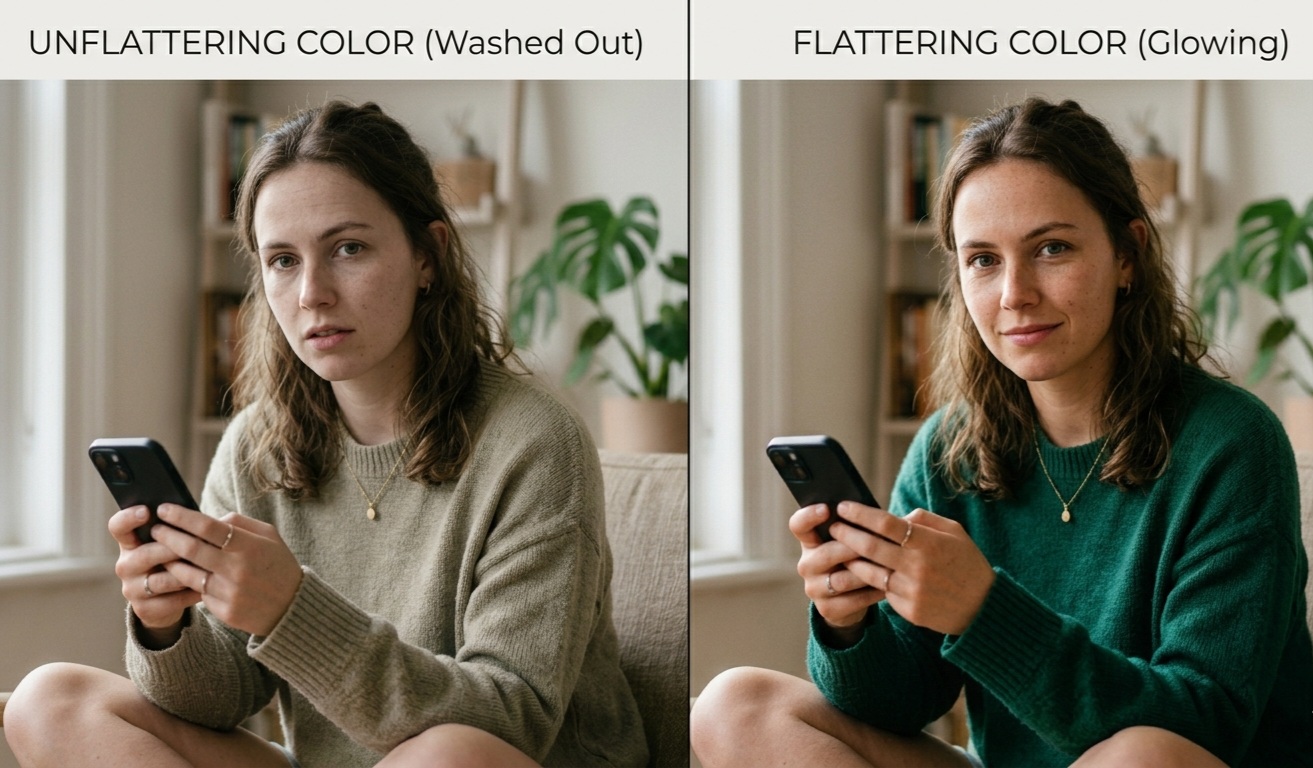
When styled with neon colors or extremely pale pastels, the complexion may appear tired, dull, uneven, or washed out.
Because olive undertone naturally carries depth, respecting that depth often creates a sense of visual authority and elegance.
Can Olive Undertone Break Rules?
Yes, rule breaking works when done intentionally.
If you want to wear bright pink, keeping it away from the face and balancing with muted makeup can maintain harmony. If you want to wear black, softening the look with warm blush and lipstick can prevent harshness.
If icy blue clothing is worn, balancing it with warmer jewelry or lip color can restore undertone balance.
Rule breaking works best when depth or muting is preserved somewhere else in the outfit.
Real-Life Styling Experience, Corrections, and Practical Insight
Olive undertone is one of the most misunderstood undertones, not because it is rare, but because it does not behave in predictable ways.
I have worked with many women who had olive undertones without realising it for years. Most of them felt confused about their appearance in a way they could not explain. Some days they looked clear and striking. Other days, with the same effort, they looked slightly dull, slightly tired, or even grey.
That inconsistency is not random.
It is the nature of olive undertone.
What I Notice First
When I look at olive undertone skin, I do not look for warmth or coolness in the usual way. I look for how the skin reacts to imbalance.
Olive undertones carry a subtle green or muted base. Because of this, the wrong colors do not simply clash, they distort.
I once worked with a woman who believed she had a warm undertone. She wore a lot of mustard, orange, and golden tones. Individually, these colors seemed right.
But when she wore them, especially near her face, something shifted. Her skin looked slightly sallow. There was a faint greyness that appeared by the end of the day. Her features seemed less defined.
She thought she needed brighter makeup.
She didn’t. She needed balance.
We replaced those tones with more controlled colors, muted teal, deep olive green, soft berry, and neutral earth tones that were not overly warm.
The change was immediate.
Her skin looked clearer. The grey undertone disappeared. Her face looked more alive, more dimensional.
That is the key with olive undertone. It is not about warmth or coolness alone. It is about controlling both.
Why Olive Undertone Feels So Confusing
Olive undertone does not behave consistently with standard rules.
Warm colors can sometimes look good, but sometimes make the skin look yellow or dull. Cool colors can sometimes look fresh, but sometimes make the skin look flat or grey.
This is why many women with olive undertones feel like nothing works all the time.
Because extreme temperatures rarely work.
I remember a client who alternated between bright cool pinks and warm oranges, trying to figure out what suited her. Some outfits worked beautifully. Others looked completely off.
She described it perfectly. She said, “I feel like I don’t have one undertone. I feel like I change.”
She didn’t change. The colors were inconsistent.
The Turning Point
What changed everything for her was understanding one principle.
Olive undertone needs muted balance, not intensity.
We shifted her toward softer, controlled tones. Dusty rose instead of bright pink. Muted green instead of neon or yellow-green. Deep teal instead of bright blue.
Suddenly, her appearance became consistent.
Her skin looked smooth instead of uneven. Her features looked defined instead of lost.
Most importantly, she stopped second-guessing herself.
Where Olive Undertone Goes Wrong
The most common issue is choosing colors that are too strong in one direction.
Very warm tones can make the skin look yellow or muddy. Very cool tones can make the skin look grey or lifeless.
I once styled a woman for a formal event where she chose a bright coral dress. It looked vibrant, but on her skin, it pulled out uneven tones and made her complexion look patchy in photographs.
For another event, we chose a muted berry shade.
The difference was immediate.
Her skin looked even. Her face looked calm and balanced. The outfit looked like it belonged to her, not like it was sitting on top of her.
The Everyday Experience
Olive undertone women often spend more time adjusting than they realise.
Trying different outfits. Changing lip colors. Feeling unsure even when everything looks “fine.”
This is because olive undertone reacts quickly to imbalance.
Even a slightly wrong shade can affect the entire face.
When the right tones are chosen, everything becomes easier. The face looks stable. The effort feels minimal.
Shopping Without Clear Clarity
Shopping can feel frustrating because many colors look appealing but behave differently when worn.
A green may look perfect but turn yellowish on the skin. A pink may look soft but appear too cool once worn.
This is where most mistakes happen.
With experience, you begin to recognise muted, balanced tones that work consistently.
The Role of Fabric and Finish
Olive undertones respond well to slightly muted finishes.
Overly shiny fabrics can exaggerate uneven tones. Very flat, dull fabrics can remove dimension.
Balanced textures, soft matte with slight sheen, tend to work best.
Accessories and Metals
Olive undertones can wear both gold and silver, but extremes can feel off.
Very yellow gold may look too strong. Very bright silver may look too sharp.
Antique gold, brushed metals, mixed metals, and softer finishes usually create the best harmony.
Common Mistakes That Repeat
Choosing overly warm yellows and oranges.
Wearing very cool icy tones without balance.
Ignoring muted tones in favour of bright colors.
Trying to “correct” the skin with makeup instead of color harmony.
These mistakes are common because olive undertone is rarely explained clearly.
What Actually Works
The most effective approach is controlled neutrality.
Colors that are slightly muted, slightly balanced, not too warm, not too cool.
When this balance is achieved, olive skin looks its best, clear, dimensional, and naturally striking.
The Emotional Shift
This is where everything changes.
Most olive undertone women carry quiet confusion for years. When they finally understand what works, there is relief.
Getting dressed becomes easier. Choices feel clearer. The mirror feels consistent.
And that quiet certainty changes how they see themselves.
Simple Do and Do Not Guidance
Do: Choose muted, balanced tones.
Do: Look for colors that are not overly warm or overly cool.
Do: Use soft contrast instead of harsh contrast.
Do: Test colors in natural light.
Do Not: Choose very bright or extreme colors.
Do Not: Overload warmth or coolness.
Do Not: Ignore how colors change your skin tone.
Frequently Asked Questions
1. Why do I sometimes look slightly grey or dull even when my outfit is nice?
Because olive undertones react very sensitively to imbalance. When colors are too bright, too warm, or too cool, they can pull out the muted green in your skin instead of complementing it. This creates that subtle grey or tired effect. The solution is not more effort, but better alignment. Muted, balanced tones allow your natural complexion to look clear and healthy instead of overshadowed.
2. Can I wear warm tones?
Yes, but they need to be softened and slightly muted. Strong orange-based or very golden shades can overwhelm your skin and make it look uneven. Warmer tones like olive green, terracotta with a muted base, or soft mustard work much better because they sit closer to your natural coloring instead of fighting it.
3. Can I wear cool tones?
Yes, but avoid very icy or sharp cool shades. Extremely cool colors like icy blue or stark lavender can create contrast that feels disconnected. Instead, choose softened cool tones like dusty blue, muted plum, or greyed-out pastels that blend rather than stand apart.
4. What is the safest approach when choosing outfits and accessories?
Always come back to balance and softness. Your undertone does not thrive in extremes. Whether it is clothing, jewellery, scarves, or shoes, choosing tones that feel slightly muted and balanced will consistently give you a more refined and harmonious look.
5. Why do bright colors often look too strong on me?
Because they overpower your natural subtlety. Olive undertones carry complexity, not sharp contrast. Very bright colors sit on top of your skin instead of blending into it, which is why they can feel loud or disconnected rather than enhancing.
6. What metals suit me best in jewellery and accessories?
Soft gold, antique gold, brushed metals, and mixed metals tend to work beautifully. Extremely shiny yellow gold can sometimes feel too strong, while very icy silver can feel too cool. Slightly toned-down finishes create a much more natural elegance on olive skin.
7. Why does bright yellow make me look off?
Because it exaggerates the yellow-green tones already present in your skin. Instead of creating glow, it can make your complexion look sallow. If you like yellow, choose muted or mustard versions that feel grounded rather than sharp.
8. Why does pink sometimes not suit me?
Many pinks are either too cool or too bright. When a pink leans too icy, it clashes with your undertone. When it is too vibrant, it overpowers it. Muted rose, dusty pink, or warm blush tones are much more flattering because they sit gently on your skin.
9. Can I wear black?
Yes, black can look very strong and elegant on you, but it works best when balanced. Pairing black with softer tones, muted accessories, or textured fabrics prevents it from looking too harsh against your skin.
10. What about white?
Very stark white can feel too sharp and create contrast that highlights uneven tones. Softer whites, off-whites, or slightly creamy shades are much more forgiving and harmonious for olive undertones.
11. Why do I feel inconsistent even when I follow trends?
Because trends are not designed for your undertone. Olive skin requires intention. Without understanding balance, outfits can feel different every day. Once you recognize your palette, consistency becomes much easier and more natural.
12. How do I shop better for clothes, shoes, and accessories?
Start noticing tone before design. Look for colors that feel slightly softened rather than extreme. Whether you are choosing a bag, a scarf, or footwear, ask yourself if the color blends with your skin or stands apart from it. That one shift changes everything.
13. Do fabrics and textures matter for me?
Yes, very much. Extremely shiny or overly flat fabrics can exaggerate imbalance. Soft matte finishes, slightly textured materials, and balanced sheens tend to complement olive undertones better because they diffuse light more naturally.
14. Can makeup fix color imbalance in outfits?
Only partially. Makeup can correct small differences, but if your clothing or accessories are strongly mismatched, it will still show through. Harmony in styling always starts with the colors you wear, not what you apply on top.
15. Why do I keep changing outfits before going out?
Because your eye is picking up imbalance even if you cannot explain it. That discomfort usually comes from color mismatch. Once your wardrobe aligns with your undertone, that constant adjustment reduces significantly.
16. What is the biggest mistake olive undertones make?
Choosing extremes. Whether it is very bright colors, very warm tones, or very icy shades, extremes tend to overpower your natural balance. Staying in the middle ground is what creates effortless elegance for you.
17. What should I rely on when I feel confused?
Muted balance. If a color feels slightly softened, slightly toned down, and not too warm or cool, it is usually a safe choice. This applies across clothing, jewellery, scarves, belts, and even shoes.
18. Can I mix warm and cool tones?
Yes, and you are one of the few who can do it beautifully, but it has to be intentional. Mixing works best when both tones are slightly muted so that neither dominates the other.
19. What improves my overall look instantly?
Controlling the colors closest to your face. Earrings, necklaces, scarves, and even hair accessories reflect directly onto your skin. When these are balanced, your entire appearance looks more refined.
20. What truly defines olive undertone styling?
Sensitivity and balance. Your beauty does not come from bold contrast or extreme color. It comes from harmony, subtlety, and choosing tones that quietly enhance rather than loudly compete. Once you understand this, styling stops feeling confusing and starts feeling natural.
21. Why do some neutral colors still not suit me?
Because even neutrals carry hidden undertones. Some lean too warm, others too cool. On olive skin, this difference becomes very visible. A neutral that is slightly muted and balanced will blend beautifully, while one that leans too far in any direction can make your skin look uneven or tired.
22. Can I wear beige?
Yes, but choose carefully. Very warm beige can make your skin look dull, while overly pale beige can wash you out. Look for balanced, slightly muted beige tones that do not pull too yellow or too flat against your complexion.
23. Why do earthy tones sometimes work and sometimes don’t?
Because not all earthy tones are the same. Rich, slightly muted earthy shades like olive green, clay, and soft brown work beautifully. But overly warm or saturated earthy tones can feel heavy and overpower your natural balance.
24. Do accessories like belts and shoes really affect my overall look?
Yes, more than you might expect. Even though they are not near your face, they complete the visual story of your outfit. If they are too sharp or mismatched in tone, they can disrupt the harmony of your entire look.
25. What kind of bags suit olive undertones best?
Bags in muted shades such as deep olive, soft tan, dusty brown, charcoal, and muted burgundy work very well. These tones feel grounded and sophisticated without pulling your overall look out of balance.
26. How do I choose the right footwear colors?
Avoid extremes. Very bright or very contrasting footwear can feel disconnected. Instead, choose shoes in balanced tones like taupe, muted brown, soft black, or deep olive that integrate smoothly with your outfit.
27. Why do some scarves make my skin look uneven?
Scarves sit very close to your face, so their color reflects directly onto your skin. If the tone is too strong or unbalanced, it can highlight unevenness. Softer, muted scarf colors create a much more flattering effect.
28. Can I wear bold accessories?
Yes, but they should still feel controlled. Bold does not mean harsh. Even statement pieces look better when their color or finish has a slightly softened quality that aligns with your undertone.
29. Why do certain hair accessories look too harsh on me?
Because they may be too bright, too shiny, or too warm or cool. Hair accessories frame your face, so choosing softer metals or muted colors helps maintain balance and keeps your look cohesive.
30. How do I build a wardrobe that actually works for me?
Focus on consistency rather than quantity. When your clothes, shoes, bags, and accessories all follow a similar balanced palette, everything starts to work together effortlessly. This reduces confusion and increases confidence.
31. How do I know if something is truly working for me?
You will notice that your skin looks calmer, clearer, and more even. You will also feel less need to adjust your outfit throughout the day. That sense of ease is a strong sign of alignment.
32. What is the most important thing to remember for olive undertones?
Do not chase extremes. Your beauty lies in balance, softness, and quiet harmony. When your colors, accessories, and overall styling respect that, everything about your appearance feels more natural, refined, and effortless.
Choose muted colors over neon. Choose depth rather than pastel softness. Choose balanced tones instead of extremes. Keep highly saturated or icy colors away from the face whenever possible.
Core Rule Summary
When olive undertone is styled with harmony and saturation control, the skin appears smooth, dimensional, elegant, and quietly powerful.
More Guides You Might need
Why You Look Better in Some Lighting and Worse in Others
Why Do I Look Washed Out in Photos and How to Fix It
Why Do Bad People Seem to Win in Life?
Why Don’t I Feel Happy About My Pregnancy All the Time?
Why Does My Mind Feel So Heavy During My Period?
How to Dress Better Without Buying New Clothes
Is My Phone Making Me Dumb Every Day?

Why do I look bad in photos ? ( and what's the solution )
© 2026 Femmemalist™. All rights reserved.