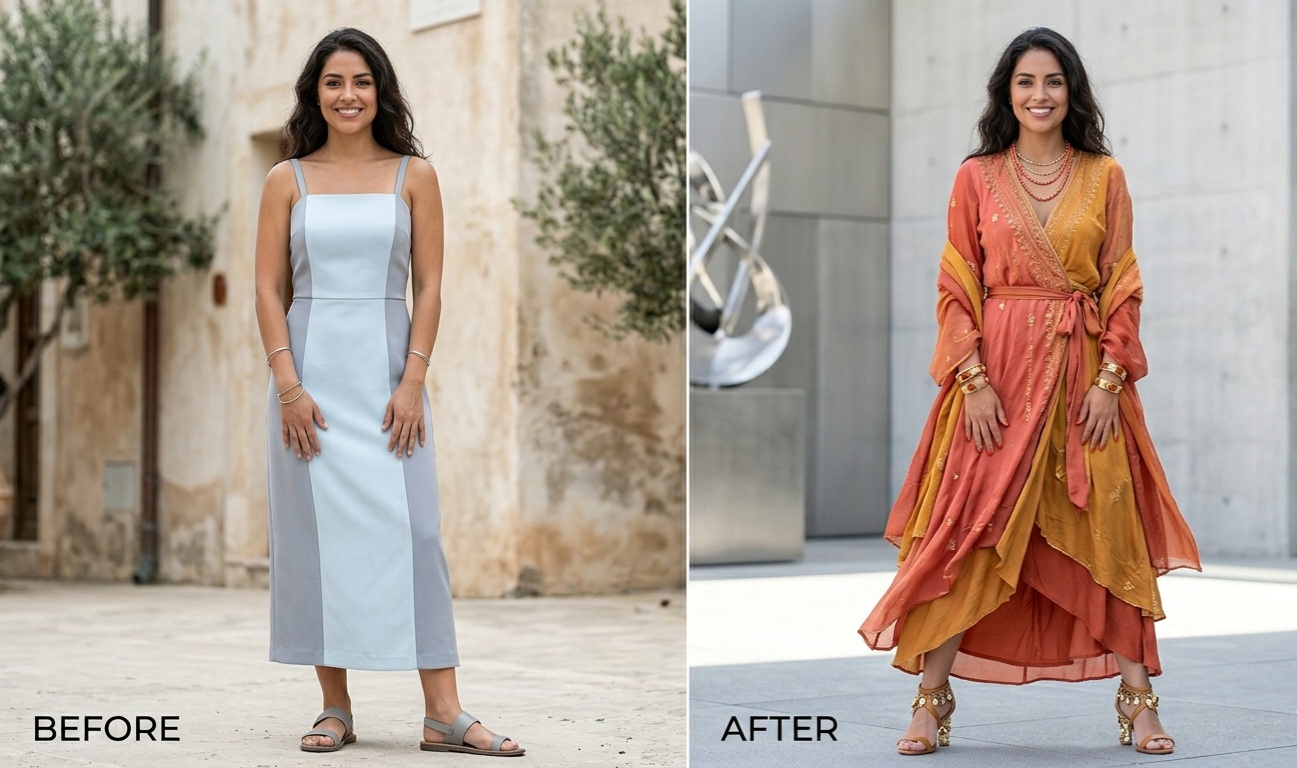
WARM UNDERTONE – THE COMPLETE ADVANCED MASTER GUIDE
Many women with warm undertones feel like something is slightly off in how their outfits look, even when the fit is right and the effort is there.
The clothes are good. The styling is thoughtful. But the final result does not feel as rich or as harmonious as it should. In most cases, this is not a fashion problem. It is a color alignment problem.
Warm undertone styling is not about adding more pieces. It is about choosing the right colors, fabrics, and tones that work with your natural golden or peach base. When this alignment is correct, everything shifts. The skin looks clearer. The outfit looks more elevated. The entire appearance feels more put together without extra effort.
This is where a real glow up begins. Not by changing your wardrobe completely, but by choosing colors that finally work with your skin tone.
The selections included here are based on patterns that consistently work across different outfits and settings. Warm color palettes, earthy tones, rich neutrals, and sunlit shades naturally enhance warm undertones, while overly cool, icy, or grey-based colors can make the skin appear dull or disconnected.
If you ever feel unsure while choosing, a curated wishlist is also available to guide you towards clothing pieces that are already aligned with warm undertones. It is designed to simplify your choices and help you build outfits that feel intentional and effortless.
What Warm Undertone Actually Is
Warm undertone means your skin carries a golden, peach, or yellow base beneath the surface. This warmth is structural. It does not change with tanning or skin depth. A very fair person can be warm. A deeper skin tone can also be warm. Undertone is about temperature, not shade.
When you observe warm undertone skin in natural daylight, you will often notice a soft golden glow or a peach reflection beneath the surface. Yellow-based clothing tones tend to blend naturally and enhance the skin, while cool-toned fabrics can sometimes look slightly harsh or draining.
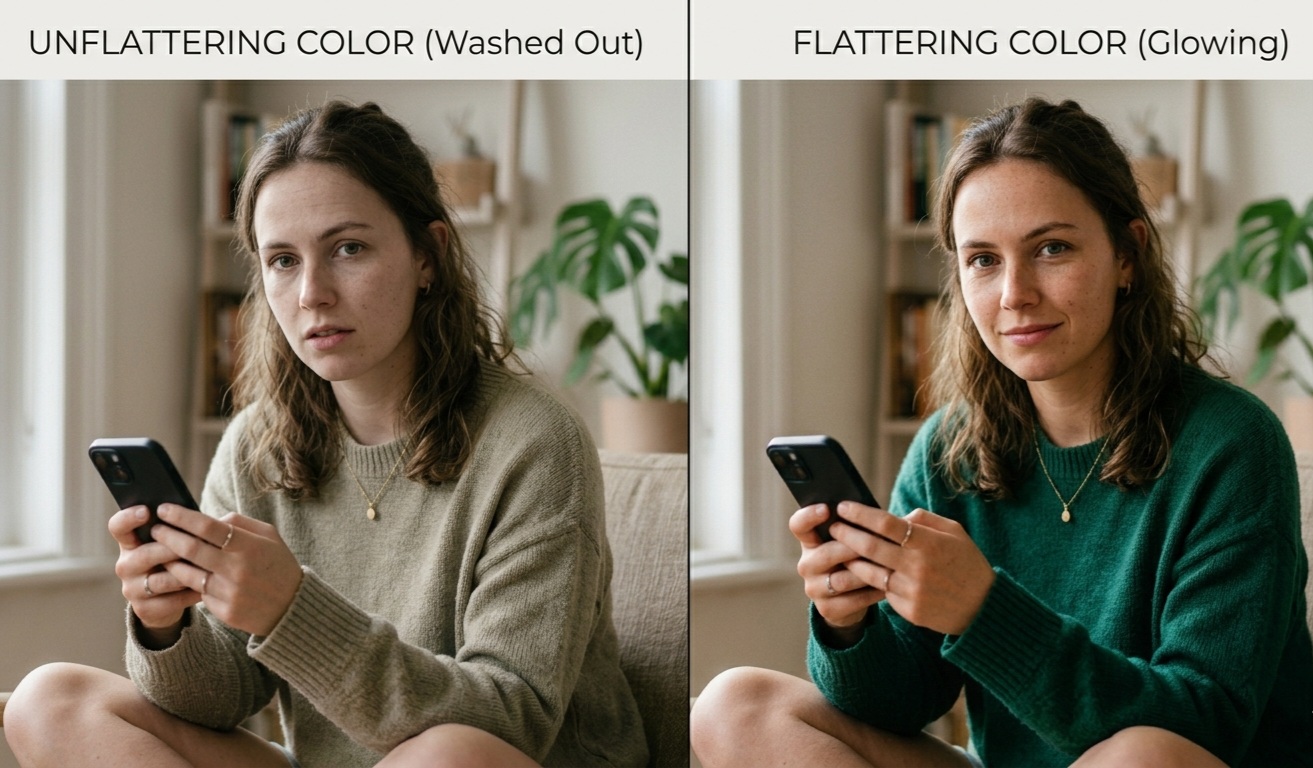
Warm undertone skin reflects light in a soft, radiant way. When styled correctly with the right clothing colors, it looks luminous, healthy, vibrant, and naturally glowing. When styled incorrectly, it can appear flat, dull, or slightly grey.
Warm undertone does not need contrast from cool tones. It needs warmth, richness, depth, and color harmony in clothing.
Why Color Reacts Strongly on Warm Skin
Your skin already contains golden pigment. When you introduce icy or blue-heavy shades near your face, the warmth in your skin gets visually drained. This is why icy blue can make warm skin look tired. This is why cool pink can make warm skin appear slightly greenish.
When you introduce earthy, golden, and red-based shades, something powerful happens. The color reflects your internal warmth back onto your face. Your complexion appears smoother. Your cheeks look naturally flushed. Your eyes appear softer and more inviting.
Warm undertone thrives in temperature harmony, not cool contrast.
Core Color Principle for Warm Undertone
If the color contains more yellow or red than blue, it will likely flatter you. If the color contains more blue than yellow, it may compete with you. This is the fastest mental filter when shopping.
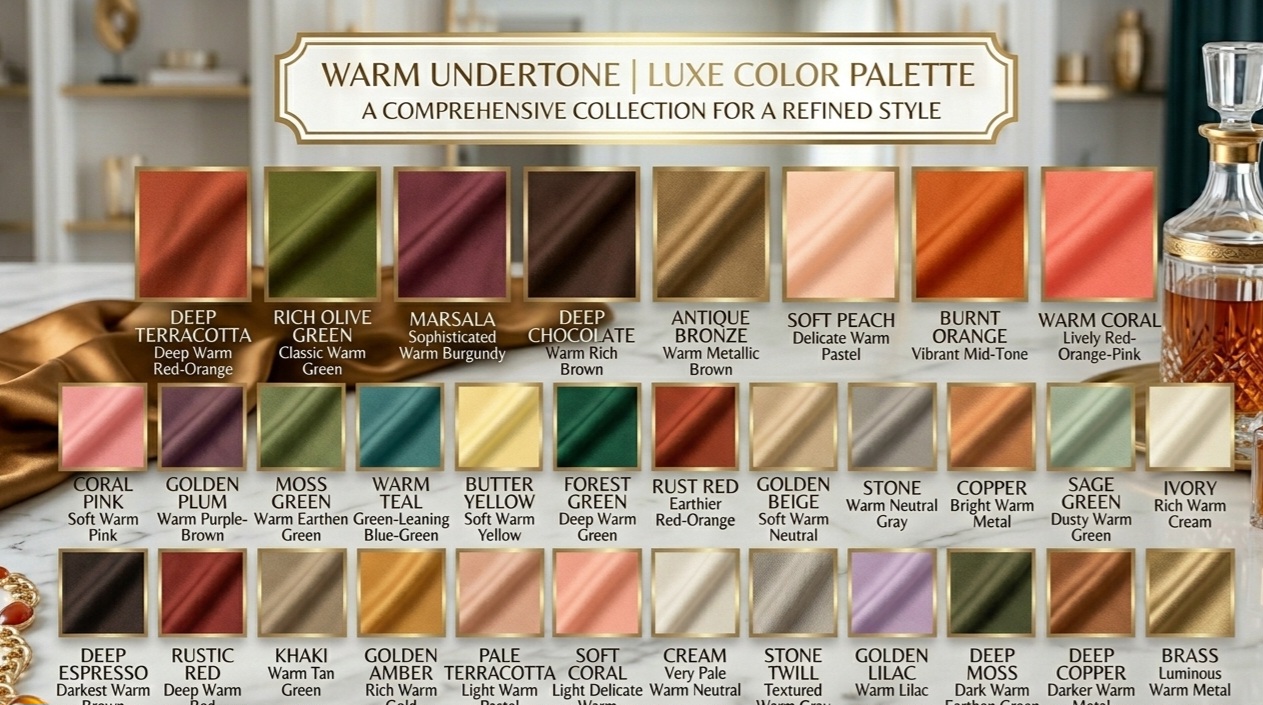
Warm Undertone Luxe Color Palette
Warm undertones glow with earthy, golden, and sun-lit colors. This palette enhances the warmth in the skin while creating rich and elegant outfits.
- Deep Terracotta – A deep warm red-orange that adds strong earthy richness. Alternative: Burnt Clay.
- Rich Olive Green – Classic warm green that blends naturally with warm complexions. Alternative: Olive Green.
- Marsala – Sophisticated warm burgundy shade ideal for dresses and jackets. Alternative: Wine Red.
- Deep Chocolate – A rich warm brown used for coats, trousers and leather pieces. Alternative: Cocoa Brown.
- Antique Bronze – Warm metallic brown perfect for accessories and evening outfits. Alternative: Burnished Copper.
- Soft Peach – A delicate warm pastel that brightens the complexion. Alternative: Apricot.
- Burnt Orange – A vibrant warm orange tone that creates bold outfits. Alternative: Rust Orange.
- Warm Coral – A lively orange-pink shade that adds brightness. Alternative: Coral Red.
- Coral Pink – Soft warm pink perfect for summer outfits. Alternative: Salmon Pink.
- Golden Plum – A warm purple-brown shade that adds richness. Alternative: Aubergine.
- Moss Green – Earthy green tone perfect for casual outfits. Alternative: Fern Green.
- Warm Teal – A blue-green shade that still carries warm depth. Alternative: Deep Teal.
- Butter Yellow – A soft warm yellow that brightens outfits. Alternative: Light Gold Yellow.
- Forest Green – Deep natural green that looks rich on warm undertones. Alternative: Pine Green.
- Rust Red – An earthy red shade that enhances warm complexions. Alternative: Brick Red.
- Golden Beige – A soft warm neutral ideal for trousers and knitwear. Alternative: Sand Beige.
- Stone – A warm neutral gray that balances brighter shades. Alternative: Light Stone Gray.
- Copper – A glowing warm metallic tone used in accessories. Alternative: Rose Copper.
- Sage Green – Dusty warm green that keeps outfits soft and natural. Alternative: Dusty Olive.
- Ivory – Rich warm cream used for shirts, dresses, and layering pieces. Alternative: Off-White.
- Deep Espresso – The darkest warm brown perfect for leather and footwear. Alternative: Coffee Brown.
- Rustic Red – A deep warm red shade that creates bold outfits. Alternative: Brick Red.
- Khaki – Warm tan-green neutral used for trousers and jackets. Alternative: Military Khaki.
- Golden Amber – Rich golden brown shade ideal for accessories. Alternative: Honey Gold.
- Pale Terracotta – A softer lighter version of terracotta. Alternative: Clay Beige.
- Soft Coral – A delicate light coral tone for summer clothing. Alternative: Peach Coral.
- Cream – Very pale warm neutral ideal for elegant outfits. Alternative: Vanilla Cream.
- Stone Twill – Textured neutral gray often used in tailored clothing. Alternative: Ash Gray.
- Golden Lilac – A warm lilac shade that adds unique softness. Alternative: Dusty Lavender.
- Deep Moss – Dark earthy green with rich depth. Alternative: Dark Olive.
- Deep Copper – A darker metallic copper used for statement accessories. Alternative: Burnt Copper.
- Brass – Luminous warm metal shade perfect for jewelry. Alternative: Antique Gold.
Warm Undertone Outfit Combinations
- Deep Terracotta + Golden Beige + Brass
- Rich Olive Green + Ivory + Copper
- Marsala + Golden Beige + Antique Bronze
- Burnt Orange + Khaki + Cream
- Forest Green + Golden Amber + Brass
- Rust Red + Golden Beige + Deep Espresso
- Warm Coral + Ivory + Copper
- Butter Yellow + Moss Green + Khaki
- Golden Plum + Stone + Brass
- Soft Peach + Cream + Golden Amber
- Sage Green + Golden Beige + Copper
- Deep Moss + Rust Red + Ivory
Colors That Create Problems
Icy blue, cool pink, true white, silver grey, blue-based purple, and mint can visually drain warmth from the skin. These shades introduce cool temperature near the face which can make warm undertone skin appear dull, flat, or slightly sallow.
This does not mean these colors must never be worn. It simply means they require balance. When used near the face without warm counterbalance, they can reduce the natural radiance warm undertones carry.
How to Apply This in Daily Life
College or Casual Settings
Choose cream tops instead of stark white. Choose olive joggers instead of mint. Choose warm denim rather than icy blue denim. Choose coral sneakers instead of pastel pink.
These small shifts in color temperature can make your face appear healthier and more vibrant even without makeup.
Office Environment
Replace grey blazers with camel or chocolate tones. Replace icy shirts with warm beige or peach shades. Warm burgundy or terracotta blouses create authority while maintaining natural glow.
Professional Authority Strategy
Warm undertones project grounded leadership. Earth tones such as camel and chocolate communicate stability and quiet confidence. These colors create a sense of warmth while maintaining authority.
Strategic use of mustard or terracotta can introduce creative energy while still feeling professional and intentional.
Photography Strategy
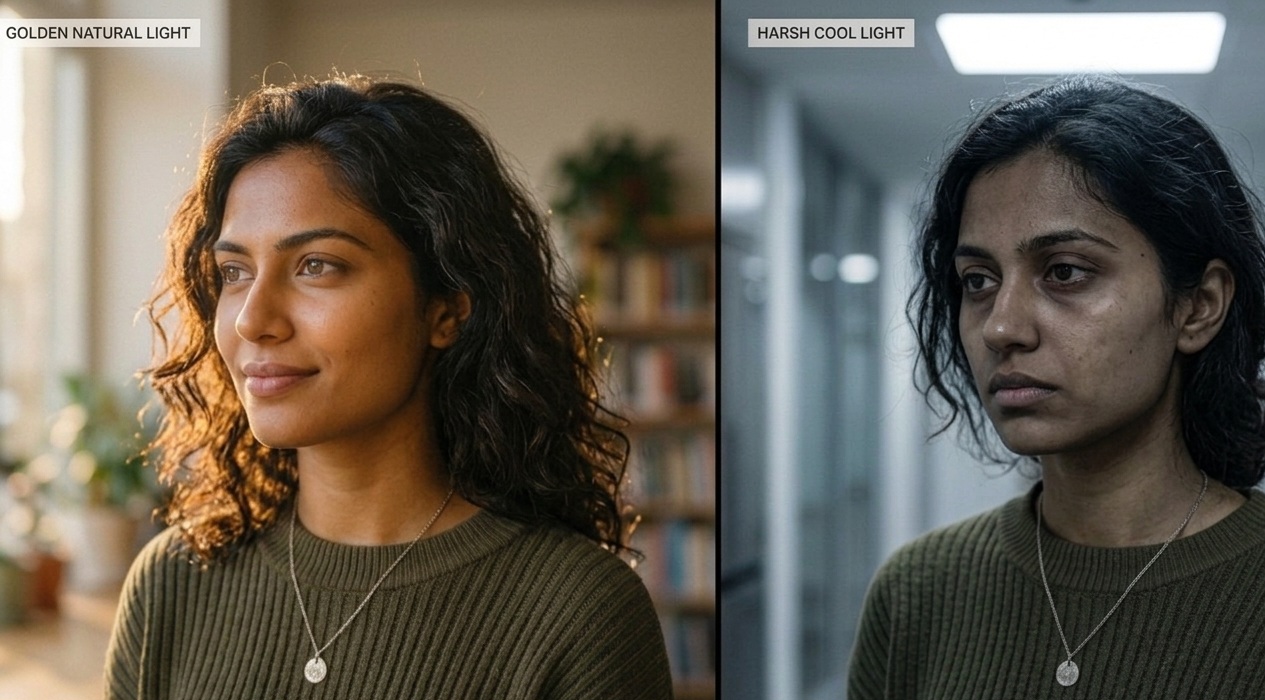
Under cool LED lighting, warm skin can sometimes look slightly dull because blue light cancels golden undertones. Wearing rust, terracotta, or golden accessories restores warmth and improves complexion balance.
Under natural sunlight, warm undertones glow beautifully in cream, olive, soft coral, and terracotta shades. These colors reflect the warmth already present in the skin.
Wedding and Formal Styling
Formal styling for warm undertones works best when metallic temperature supports the skin.
Choose gold embroidery near your face rather than silver. Copper and bronze metallics photograph beautifully on warm skin. Deep warm red garments tend to outperform cherry red because they maintain warmth harmony.
Champagne fabrics often appear more elegant on warm undertones than icy silver because they reflect golden light.
Fabric and Texture Interaction
Warm undertones pair exceptionally well with textured and soft fabrics that reflect light gently.
Linen, suede, velvet, soft cotton, matte silk, and knit fabrics in earthy tones enhance the natural warmth and softness of warm skin.
Very icy satin in pale cool shades may sometimes dull the complexion. If satin is worn, choosing warm shades such as copper, champagne, or terracotta maintains visual harmony.
Makeup Application Logic
Foundation
Select golden or neutral-warm foundation bases. If foundation appears pink, grey, or slightly ashy after blending, it is likely too cool for your undertone.
Concealer
Yellow-based correctors tend to brighten warm undertone skin effectively because they reinforce the skin’s natural golden pigment.
Blush
Peach, warm coral, apricot, and terracotta blush shades enhance natural warmth and create a healthy flush.
Contour and Bronzer
Warm bronzers add natural depth and dimension on warm undertones. Extremely cool contours may appear slightly grey.
Lipstick
Brick red, burnt coral, warm nude, terracotta, and warm berry shades harmonize beautifully with warm undertones.
Highlighter
Golden champagne, soft gold, and light bronze highlighters amplify glow. Icy silver highlighters may appear disconnected from warm skin.
Jewelry Strategy
Metals that reflect warmth amplify the natural glow of warm undertone skin.
Gold, rose gold, bronze, and copper jewelry tend to blend seamlessly with the skin and enhance luminosity.
If silver jewelry is worn, pairing it with warm clothing near the face helps restore temperature balance.
Wardrobe Correction Plan
If your wardrobe currently feels visually dull, it does not need to be replaced immediately. Undertone harmony can be improved gradually.
Replace pure white with cream. Replace cool pink garments with peach tones. Replace grey with camel. Replace icy blue clothing with olive or warm teal. Replace raspberry lipstick with brick red.
Even small shifts toward warm color temperature can significantly improve how vibrant your complexion appears.
Social Perception Theory
When warm undertone is styled correctly, the visual impression created tends to feel inviting, radiant, grounded, approachable, confident, and vibrant.
When styled incorrectly in strongly icy tones, the face may appear tired, flat, dull, overly yellow, or slightly unbalanced.
This subtle shift in color harmony influences how energetic and healthy people perceive you to be.
Can Warm Undertone Break Rules?
Yes rule breaking works when done intentionally.
If you want to wear icy blue, pairing it with warm makeup and gold jewelry restores balance. If you want to wear cool pink, introducing peach blush helps maintain warmth harmony.
If grey must be worn, choosing a warmer grey rather than steel-toned grey improves compatibility with warm skin.
Rule breaking works best when warmth is reintroduced somewhere else in the outfit.
Real-Life Styling Experience, Corrections, and Practical Insight
Warm undertone is often misunderstood because it feels easy, but it is also easy to get slightly wrong.
I have worked with many women who naturally had warmth in their skin, golden, peach, or olive tones that already carried richness. Most of them did not struggle with looking good. They struggled with looking their best consistently.
The difference is subtle, but important.
Warm undertones have a natural glow. But when the wrong kind of color is introduced, that glow can quickly turn into heaviness, dullness, or even a slightly tired appearance.
It is not about adding warmth. It is about choosing the right kind of warmth.
What I Notice First
When I observe a warm undertone, I look at how the skin responds to the colors around it.
There was a woman who believed all warm tones would suit her. She wore mustard, rust, orange, deep yellow, and heavy gold tones almost exclusively.
Individually, each piece seemed right. But together, something felt overwhelming.
Her natural glow was being covered instead of enhanced.
Her face looked slightly heavy by the end of the day, especially under indoor lighting. There was no contrast, no breathing space for her features.
We didn’t remove warmth. We refined it.
We introduced softer warm tones like warm ivory, peach-rose, terracotta with balance, and olive greens that had depth instead of intensity. We added contrast through cream, warm navy, and muted gold instead of bright yellow gold.
The change was immediate.
Her skin looked radiant instead of heavy. Her features became more defined. She looked polished without appearing overdone.
Where Warm Undertone Goes Wrong
One of the most common patterns I see is overloading warmth.
Because warm undertones can carry warmth naturally, many women assume more warmth will enhance them further. But too much warmth removes contrast and structure from the face.
I remember a client preparing for a daytime celebration. She chose a bright orange outfit with heavy gold jewelry.
It looked festive, but under sunlight, everything blended together. Her skin tone, the outfit, and the accessories all merged into one visual tone.
There was no definition.
For her next event, we shifted slightly. A softer coral-rose outfit with controlled gold accents and a warm cream base.
The difference was striking.
Her glow returned. Her features stood out. The warmth felt elegant instead of overwhelming.
The Everyday Reality
In daily life, warm undertone mistakes show up in very quiet ways.
Feeling like your outfit looks “too much” even when it is simple. Looking slightly dull in certain lighting. Feeling like your makeup looks heavy even when applied lightly.
These are not random issues.
They are usually signs that the warmth is not balanced.
When the right tones are chosen, everything becomes easier. Getting dressed feels natural. The face looks alive without effort.
Shopping Without Realising the Difference
In stores, many warm-toned pieces look appealing instantly. Golden yellows, oranges, warm browns, and rich earthy tones naturally attract attention.
But not all warmth is equal.
A yellow that leans too bright can overpower the skin. A brown that is too deep can remove light from the face. A gold that is too intense can feel harsh instead of refined.
The key is balance, not intensity.
With experience, you begin to recognise which warm tones enhance your glow and which ones compete with it.
The Role of Fabric and Finish
Warm undertones respond beautifully to certain textures.
Soft matte fabrics, gentle sheen, and natural textures like cotton, silk blends, and light wool tend to enhance the skin’s natural warmth.
Very shiny or overly reflective gold fabrics can sometimes feel excessive if not balanced properly.
It is not about avoiding shine, but controlling it.
Accessories That Make a Difference
Gold jewelry usually works well, but the tone of gold matters.
I have seen women switch from very bright yellow gold to softer antique gold or champagne gold and notice an immediate improvement.
The face looks warmer, but still refined.
Even small changes like earrings or chains can shift the entire impression.
Common Mistakes That Feel Normal
Wearing too many strong warm tones together.
Choosing bright yellow-based colors without contrast.
Using heavy golden makeup without balancing tones.
Ignoring neutrals and relying only on rich colors.
These do not feel like mistakes. But they reduce clarity over time.
What Actually Works
The goal is not to add more warmth. The goal is to refine it.
Introducing balance. Creating contrast. Allowing the skin to glow instead of compete.
Even one well-chosen warm tone can elevate your entire appearance.
Over time, this creates consistency. You stop overthinking. You begin trusting your choices.
The Emotional Shift
When warm undertone is styled correctly, the effect is not just visual.
You feel more put together. More natural. More like yourself without effort.
There is less doubt, less adjusting, less second-guessing.
And that changes how you carry yourself.
Simple Do and Do Not Guidance
Do: Choose warm tones that feel balanced and slightly muted rather than overly bright.
Do: Use warm neutrals like cream, warm beige, and soft brown to create structure.
Do: Add contrast with lighter or deeper tones.
Do: Choose gold tones that are soft rather than overly yellow.
Do Not: Overload your outfit with strong warm colors.
Do Not: Assume all gold or yellow shades will suit you.
Do Not: Ignore contrast completely.
Frequently Asked Questions
1. How do I know if a warm color truly suits me?
I always tell my clients to look at their face, not the outfit. When the tone is right, your skin looks clearer, smoother, and naturally radiant without effort. If the color is slightly off, it will not be obvious immediately, but your face will start to look a little heavy or tired. That is your first signal.
2. Can I still wear cool tones?
You can, but they need to be handled carefully. I usually balance them with warmer elements like your shoes, bag, or jewellery. The goal is never to eliminate contrast, but to make sure your overall look still feels warm and cohesive.
3. Why do some yellows work and others don’t?
Yellow is very sensitive. Softer, warmer yellows tend to blend beautifully, while sharp or slightly cool yellows sit separately from your skin. When that happens, the color wears you instead of the other way around.
4. Is gold always the better choice for me?
In most cases, yes. But I rarely recommend very bright gold. Softer, slightly muted gold tones look far more refined and integrate better with your overall styling.
5. Why do I sometimes look dull even in warm colors?
Because warmth alone is not enough. If everything you wear is at the same level of warmth without any contrast or variation, the look becomes flat. You need a little depth and structure to keep it alive.
6. What colors can I rely on without thinking too much?
Warm cream, soft peach, and gentle honey tones are my go-to recommendations. They are easy, elegant, and rarely create imbalance.
7. Can I wear black?
Absolutely. But I always soften it. A warm-toned bag, a gold detail, or even the finish of your shoes can make black feel much more natural on you.
8. Why does orange sometimes feel too strong?
Because it is already a dominant color. If the rest of your outfit is not supporting it, it can take over completely. I usually tone it down with neutrals or deeper shades.
9. How much do fabrics actually matter?
More than most people realise. Softer fabrics reflect light in a way that enhances warmth, while stiff or overly matte fabrics can make the same color look heavier than it is.
10. Can makeup correct a wrong outfit choice?
Only to a point. I have seen many people try to fix color imbalance with makeup, but if the outfit and accessories are not aligned, the effect still shows through.
11. Why does my makeup sometimes look too heavy?
Usually because everything is warm at the same intensity. When you introduce a little variation, the face starts to look lighter and more refined.
12. Are earthy tones always a safe option?
They are generally good, but not all of them. Some can be too deep or intense. I always balance them with softer pieces so the look does not feel overwhelming.
13. How should I approach neutrals?
Warm neutrals are excellent for you, but they need some depth. Flat or faded neutrals can make the entire outfit feel lifeless.
14. Why do I keep changing outfits before stepping out?
That usually means something is not sitting right visually. Most of the time, it is not the clothing itself but the way your accessories and tones are interacting.
15. Can I wear white?
Yes, but I would always guide you toward cream or warm white. Stark white can feel too sharp against your warmth.
16. Why does gold sometimes feel overpowering?
When it is too bright or too yellow, it stops complementing and starts dominating. That is why tone and finish matter just as much as the metal itself.
17. What should I look for when shopping?
I always suggest choosing pieces that feel warm but balanced. Avoid extremes. If something looks too bright or too dull on the hanger, it usually will not translate well when worn.
18. Do accessories really make that much difference?
They make the difference. Your shoes ground your look, your bag connects it, and your jewellery reflects onto your face. When these are aligned, everything else falls into place.
19. What is the most common mistake you see?
Using warmth everywhere without any control. When everything is equally warm and intense, the look loses structure and clarity.
20. What should I rely on the most while styling?
Balanced warmth with a touch of contrast. That is what keeps your look refined instead of flat.
21. Why do some outfits feel visually heavy?
Because there is no variation in tone or depth. Everything blends into one layer, which removes definition.
22. Can I mix different warm shades?
Yes, and it often looks beautiful. I just make sure they belong to the same family and do not clash in intensity.
23. How important are shoes in the overall look?
Very important. Shoes anchor your outfit. When they are in the right tone, the entire look feels stable and complete.
24. What role does my bag play?
It connects everything. A well-chosen bag can bring together colors that might otherwise feel separate.
25. Should my belt match my shoes?
It does not have to be exact, but keeping them in a similar tone creates a much more polished and intentional appearance.
26. Can I wear prints?
Yes, but I always look at the overall tone of the print. If it leans warm and balanced, it will work beautifully.
27. Why do some outfits look better in daylight?
Because natural light shows the truth. If your colors are aligned, they will hold up in any lighting condition.
28. How do I avoid looking overdone?
By controlling intensity. I keep strong elements limited and let the rest of the outfit support them quietly.
29. Where should I start when building an outfit?
Always begin near the face. Then build downward, making sure your shoes, bag, and belt follow the same tonal direction.
30. What creates a truly polished look?
Consistency. When every element feels like it belongs together, the result is effortless.
31. How do I know everything is working?
Nothing feels distracting. Your face stands out in the best way, and the outfit supports it instead of competing.
32. What is the one principle that changes everything?
Warmth needs structure. When you combine warmth with the right depth and balance across your clothing and accessories, your entire style becomes refined, natural, and complete.
Core Rule Summary
Choose golden tones over icy ones. Choose earthy shades over cool pastels. Choose red-based colors rather than blue-based ones. Keep extremely cool tones away from the face whenever possible.
When you respect your warm undertone instead of trying to cool it down, your skin does not compete with your clothing. It harmonizes with it and that harmony creates the glow people immediately notice.
More Guides You Might need
Why You Look Better in Some Lighting and Worse in Others
Why Do I Look Washed Out in Photos and How to Fix It

Why Do Bad People Seem to Win in Life?

Why Don’t I Feel Happy About My Pregnancy All the Time?

Why Does My Mind Feel So Heavy During My Period?
How to Dress Better Without Buying New Clothes

Why do I look bad in photos ? ( and what's the solution )
Is My Phone Making Me Dumb Every Day?
© 2026 Femmemalist™. All rights reserved.